Skill Gap Analysis for Job Seekers: A 2026 Step-by-Step Guide
Learn how to run a personal skill gap analysis in 2026 with this step-by-step guide — identify what employers want, assess where you stand, and close the gap fast.
Skill gap analysis for job seekers: a 2026 step-by-step guide
A skill gap analysis is the fastest way to find out exactly why you're not landing interviews and what to do about it before your next application.
The hiring paradox that's costing job seekers opportunities in 2026
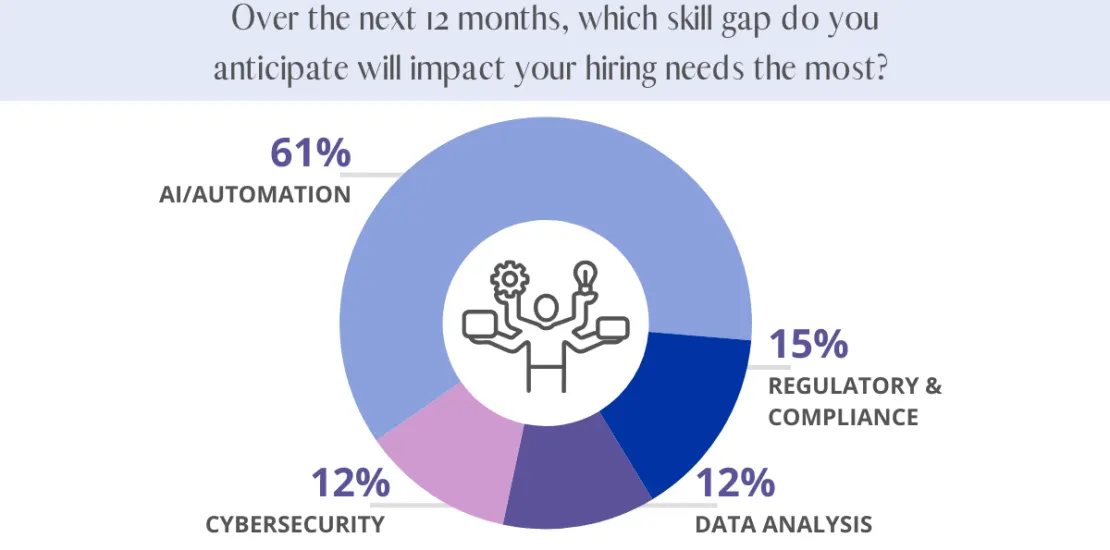
Applications per job opening have doubled since 2022, yet 72% of employers globally say they're struggling to hire. The problem isn't a shortage of candidates. It's a shortage of candidates with the right skills. The World Economic Forum reports that 63% of employers now identify skill gaps as the single biggest barrier to business transformation, and projects that 39% of core job-market skills will be transformed by 2030. Meanwhile, NACE's Job Outlook 2026 survey confirms that 70% of employers are using skills-based hiring, evaluating what you can do rather than where you went to school or what your job title used to be.
For job seekers, this creates a specific, solvable problem. You may have plenty of experience, but if it doesn't map to what a hiring manager is scanning for, your resume is invisible. A personal skill gap analysis fixes that by showing you precisely where the gap is and giving you a concrete plan to close it.
What a skill gap analysis actually is (and isn't)
A skill gap analysis is a systematic process of comparing the competencies you currently have against the competencies required for a specific target role. At the individual level, it answers one clear question: what stands between me and the job I want?
What it is not: a vague self-reflection exercise, a personality assessment, or a reason to feel behind. It's also not a one-time event. As the job market shifts, particularly with AI adoption accelerating and new roles emerging monthly, your skill gap analysis should be revisited at least every six months. Think of it less like a test and more like a GPS recalculation. You check it regularly so you don't miss a turn.
Why employers are demanding this kind of self-awareness right now
The shift to skills-based hiring isn't a trend. It's a structural change in how organizations find and evaluate talent. Nearly 70% of organizations now prioritize demonstrated skills over traditional degree requirements, according to workforce research. This creates real opportunity for candidates who can speak precisely about their competencies, and real risk for those who rely on credentials alone.
The industries feeling the most acute pressure in 2026 show you exactly where targeted upskilling pays off:
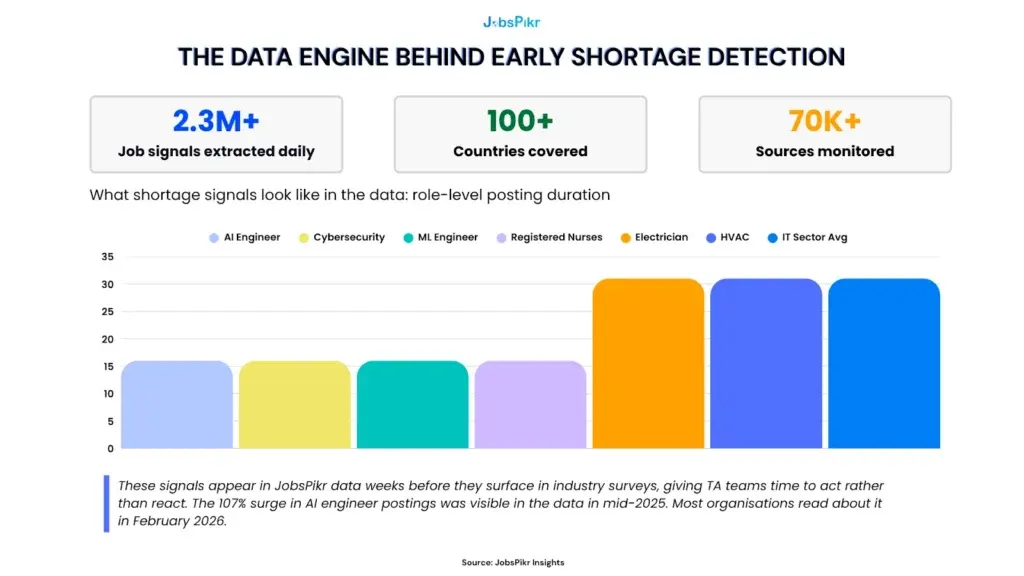
- Technology and AI: AI talent demand exceeds supply by 3.2 to 1 globally; AI engineer job postings more than doubled in the second half of 2025 alone.
- Healthcare: Workforce shortages are driving demand for both clinical and health-tech hybrid roles.
- Cybersecurity: 81% of organizations report a technology skills gap, with security roles among the hardest to fill.
- Skilled trades: Persistent shortages across construction, manufacturing, and infrastructure continue into 2026.
The broader stakes are significant: if left unaddressed, a global skilled-worker shortage of over 80 million roles could cost businesses $8.5 trillion by 2030. For individual job seekers, the window to differentiate yourself through targeted skills is wide open right now, but it won't stay that way.
How to run your personal skill gap analysis: a step-by-step framework
This process works whether you're entering the workforce for the first time, switching industries mid-career, or targeting a promotion. Work through each step in order.
Step 1: Define your target role with precision
Vague targets produce vague results. Before you can identify a gap, you need to know exactly what you're aiming at. Start by identifying 2-3 specific job titles, not broad categories like "marketing" or "tech," but titles like "B2B Content Marketing Manager" or "Junior Data Analyst." Alongside those titles, list 5-10 companies you'd genuinely want to work for.
Use the SMART framework to structure this: your target should be Specific (a real job title), Measurable (you'll know when you've landed it), Achievable (within your realistic timeline), Relevant (aligned with your broader career direction), and Time-bound (set a 3-6 month window to land your first interview).
This precision matters because different employers use different language for similar roles. A "Customer Success Manager" at a SaaS company requires different skills than the same title at a logistics firm. The more specific your target, the more accurate your gap analysis will be.
Step 2: Map what the market actually requires
Now you need ground truth about what employers want, not what you assume they want. Here's how to build an accurate picture:
- Collect 5-10 live job postings for your target role from LinkedIn, Indeed, and company career pages. Pull them in the same week so the data is current.
- Highlight every skill mentioned, both hard skills (e.g., "Salesforce," "Python," "SQL," "project management software") and soft skills (e.g., "stakeholder communication," "cross-functional leadership," "analytical thinking").
- Tally frequency. Any skill that appears in 3 or more postings is a core requirement. Skills appearing in 7+ postings are non-negotiable.
- Study LinkedIn profiles of people currently in your target role. What certifications do they list? What previous roles did they hold? What skills are endorsed most often?
- Cross-reference with industry reports. Sector-specific salary surveys and workforce reports often surface the skills that command premium pay, not just the skills that get you hired, but the ones that get you hired at a higher rate.
ATS note: 99% of large companies use applicant tracking systems to filter resumes before a human sees them. If the skills on your resume don't match the language in the job description, you may never reach the interview stage. This step directly protects you from that filter.
Step 3: Audit your current skills honestly
Create a Master Skill List. Go through your entire work history, education, volunteer work, freelance projects, and even relevant hobbies. Write down every skill you've actually used, then anchor each one to a specific example. Don't write "Communication." Write "Presented monthly performance reports to a cross-functional team of 15 stakeholders." That specificity will serve you later when you write your resume and prepare interview answers.
Organize your list into three categories:
| Category | What it means |
|---|---|
| Strong | You've used this skill repeatedly and can prove results |
| Developing | You have foundational knowledge but limited applied experience |
| Absent | You haven't used this skill at all, or only theoretically |
Be honest. Overestimating your current skills leads to a gap analysis that doesn't actually close your gap.
Step 4: Compare and identify the gaps
Place your Master Skill List next to the required skills from Step 2. For each required skill, mark whether it falls in your "Strong," "Developing," or "Absent" column. The result is your gap map: a clear visual of where you're competitive and where you're not.
Prioritize gaps using two filters:
- Frequency: Skills mentioned in most job postings should be addressed first.
- Learnability: Some gaps can be closed in 4-6 weeks (a tool like Google Analytics, a software certification). Others take months (a coding language, clinical skills). Sequence your effort accordingly.
Step 5: Build a targeted closing plan
With your gap map in hand, build a realistic development roadmap. Structure it in three tiers:
Tier 1, Quick wins (0-4 weeks): Free or low-cost certifications, LinkedIn Learning courses, YouTube tutorials for specific tools. Good for "Developing" skills you just need to formalize.
Tier 2, Structured upskilling (1-3 months): Platforms like Coursera, edX, Google Career Certificates, or industry-specific bootcamps. Best for "Absent" skills that appear frequently in your target job postings.
Tier 3, Applied practice (ongoing): Freelance projects, open-source contributions, volunteer roles, or side projects that let you build a real portfolio. This is how you convert a certification into demonstrated experience, which is what employers actually want to see.
A few high-signal certifications worth considering for 2026, depending on your target field:
- Google Data Analytics Certificate (Coursera): a strong entry point for data roles
- AWS Certified Cloud Practitioner: recognized across tech, finance, and healthcare
- Google Project Management Certificate: widely recognized across industries
- CompTIA Security+: a foundational credential for cybersecurity roles
- HubSpot Content Marketing Certification: free and well-regarded in marketing hiring
Step 6: Track progress and recalibrate
Set a 30-day and 90-day checkpoint. At each checkpoint, run a lightweight version of Step 4 again. Check whether the skills you've been building are showing up as requirements in fresh job postings. Markets move. AI is reshaping job descriptions faster in 2026 than at any prior point. A skill that was "nice to have" in January may be "required" by Q3.
How to demonstrate closed gaps to employers
Identifying and closing a skill gap means nothing if you can't communicate it. Here's how to translate your analysis into hiring-ready assets.
On your resume: Lead with impact, not activity. Avoid listing skills as a bare inventory. Instead, embed them in achievement bullets using the formula: [Action verb] + [skill used] + [result produced].
- "Familiar with data analysis tools"
- "Analyzed customer churn data using Python and Tableau, identifying three retention levers that reduced quarterly churn by 11%"
In your skills section: Mirror the exact language from the job posting. If the posting says "stakeholder management," don't write "managing relationships." ATS systems match strings, not meanings.
In interviews: Use the STAR method (Situation, Task, Action, Result) to demonstrate each skill with a concrete story. If the skill is newly acquired (Tier 1 or 2), be transparent: "This is an area I've been actively developing. Here's the course I completed and here's how I've already applied it." Employers respect self-awareness and proactive growth far more than candidates who fake proficiency.
Portfolio and proof: For technical skills especially, a GitHub repository, a published case study, a freelance client result, or even a self-directed project write-up on LinkedIn turns "I learned X" into "I can do X." That's the difference between a certification and demonstrated competency.
Skill gap self-assessment checklist
Use these diagnostic questions to locate yourself in the process and choose your next step:
- Have I identified 2-3 specific target job titles (not broad categories)?
- Have I collected at least 5 live job postings for my target role within the past 30 days?
- Have I tallied which skills appear in 3+ postings?
- Have I created a Master Skill List with specific examples for each skill I claim?
- Have I honestly categorized each required skill as Strong, Developing, or Absent?
- Do I have a concrete plan (course, certification, project) for each Absent or Developing skill that appears frequently?
- Is my resume using the exact skill language from job postings, not paraphrased versions?
- Have I set a 30-day checkpoint to reassess?
If you answered "no" to three or more of these, you have a clear starting point: go back to the first "no" and work forward from there.
What to do in the next 24 hours
Don't let this framework sit as theory. Here is your three-step action for today:
- Open a spreadsheet and create three columns: Required Skill, My Current Level (Strong / Developing / Absent), and Action to Close Gap.
- Pull five job postings for your target role right now, not from memory but from live listings, and populate the first column with every skill mentioned more than twice.
- Fill in column two honestly, then identify the single highest-frequency gap you can start closing this week. Find one course, one certification, or one project that directly targets it and schedule the first hour of work on your calendar before you close this tab.
The job seekers who land roles in a skills-based hiring market aren't necessarily the most experienced. They're the ones who know exactly where their gaps are and can prove, with evidence, that they've closed them. Your gap analysis starts now.
Editor's Picks
 News
News AI Layoffs 2026: Record Profits, Pink Slips & Jobs That Survive
Jul 20, 2026
 Industries
 AI & ML Engineer Jobs 2026: Salaries, Skills & How to Break In
Jul 20, 2026
 Skills
 AI Skills Non-Tech Workers Actually Need to Get Hired in 2026
Jul 20, 2026
 Job Search
 Hidden Job Market 2026: Land Roles Never Posted Online
Jul 20, 2026