584K Jobs Cut in 2026: What's Gone and Where to Pivot Now
Over 584,000 jobs have been cut in 2026. See which sectors are hit hardest, which companies made the biggest cuts, and exactly what to do if you're affected.
What Happened: 584,000+ Jobs Cut Across the U.S. Economy in 2026

As of July 13, 2026, layoff trackers have recorded cuts at more than 240 companies, with a combined 584,000+ jobs eliminated since January, and the number is still climbing daily. According to Challenger, Gray & Christmas, the year opened with roughly 108,000 announced job cuts in January alone, a 118% increase over January 2025 and the highest single-month total since the 2009 recession. By the close of Q1 2026, 217,362 job cuts had been announced across the U.S. economy, a pace that would eclipse every post-pandemic layoff cycle on record if it holds.
What makes this wave particularly dangerous for workers is that it is not being driven by a financial crisis or sudden revenue collapse. Most of these cuts are being executed proactively, often by companies posting record revenues, as executives restructure operations around artificial intelligence, consolidate functions, and reduce headcount in anticipation of automation doing more of the work.
What This Means If You're Job Hunting Right Now
"Tech remains the epicenter of this year's cuts. AI is the dominant force as companies are restructuring around it, automating roles and reallocating budgets toward new capabilities. The sector is being reshaped in real time.", Challenger, Gray & Christmas, 2026
If you are actively job searching or were recently laid off, the 2026 market is structurally different from prior downturns. The roles disappearing are not just entry-level positions. Mid-level white-collar roles in finance, HR, IT support, marketing, and software development are being cut at scale. The industries absorbing the most damage include tech, logistics, auto manufacturing, consumer goods, media, and the federal government. At the same time, hiring is accelerating in AI infrastructure, cybersecurity, healthcare, skilled trades, and defense, which creates a real pivot opportunity for workers willing to reskill or reframe their experience.
Key Numbers & Facts at a Glance
- 584,000+ total U.S. job cuts announced so far in 2026, across 240+ companies
- 108,000 cuts announced in January 2026 alone, the highest since the 2009 recession, up 118% vs. January 2025
- 217,362 job cuts recorded in Q1 2026 by Challenger, Gray & Christmas
- 166,090 tech workers impacted in 2026 so far, averaging 856 layoffs per day in the sector
- Amazon has cut roughly 16,000 corporate roles in 2026, bringing its total since October 2025 to nearly 30,000, about 13% of all tech cuts this year
- Oracle eliminated roughly 21,000 employees over the past year, citing AI-driven automation in its annual report
- UPS is cutting up to 30,000 additional jobs in 2026, on top of 48,000 eliminated in 2025
- In 2025, U.S. layoffs topped 1.1 million. 2026 is on track to challenge or surpass that figure
Which Workers and Job Seekers Feel This First
The impact is not evenly distributed. Here is where the pain is sharpest right now:
- Tech workers, Software engineers, product managers, UX designers, fintech developers, and e-commerce specialists are the most heavily affected group. Meta cut 8,000 jobs (roughly 10% of its workforce). Microsoft eliminated 4,800 roles, including nearly 20% of its Xbox division. Cisco cut roughly 4,000 jobs to pivot toward AI.
- Corporate back-office professionals, Finance, HR, IT support, and administrative roles at large multinationals are being automated. Nestle's "Fuel for Growth" program eliminated 16,000 white-collar roles globally using Robotic Process Automation.
- Logistics and warehouse workers, UPS's "Network of the Future" mega-hub automation program is eliminating 30,000 jobs in 2026 alone, hitting drivers, package handlers, and logistics coordinators hardest.
- Auto and manufacturing workers, General Motors has cut Factory Zero to one shift. Ford, GM, and battery plant operators have shed thousands of jobs in Michigan, Ohio, Kentucky, and Tennessee as EV production proves less labor-intensive than internal combustion engine manufacturing.
- Federal government employees, DOGE-driven efficiency initiatives that began in 2025 have continued into 2026, cutting the federal workforce by hundreds of thousands, with downstream effects on government contractors and adjacent service providers.
- Media and entertainment workers, Disney is cutting up to 1,000 jobs, largely in its newly consolidated marketing division.
- Financial services professionals, Citi is continuing a restructuring that will ultimately reduce its global headcount by roughly 20,000 employees (10% of its workforce).
What Employers and Recruiters Are Doing Now
The hiring market in mid-2026 is deeply split. Companies are simultaneously running large-scale layoffs and aggressive talent acquisition, but only for specific, high-demand capabilities. Recruiters report a clear pattern: generalist roles are being eliminated; specialist and AI-adjacent roles are being created.
Amazon, Oracle, Microsoft, and Cisco are all expanding their AI infrastructure, cloud, and security teams even as they shed corporate headcount. AI prompt engineering, machine learning operations (MLOps), and AI safety are among the fastest-growing job categories posted on major platforms in 2026. Healthcare hiring remains solid, with demand for nurses, allied health professionals, and health-tech roles largely insulated from the broader wave. Skilled trades, including electricians, HVAC technicians, and welders, continue to face a supply shortage, and employers are offering signing bonuses and apprenticeship programs to attract workers.
Recruiters are also changing how they screen candidates. With more candidates on the market, applicant tracking system (ATS) filtering has become more aggressive, and hiring managers report using AI screening tools to cut shortlists. A resume that is not keyword-optimized for the specific role gets eliminated before a human ever reads it.
What You Should Do This Week
If you have been laid off or suspect your role is at risk, here are six concrete actions to take right now:
- Run an industry pivot analysis. Cross-reference your current skills against open roles in healthcare, cybersecurity, AI/ML, skilled trades, and defense contracting. Use LinkedIn's Skills Match tool or O*NET's career exploration database to find roles where your transferable skills already meet 60-70% of requirements.
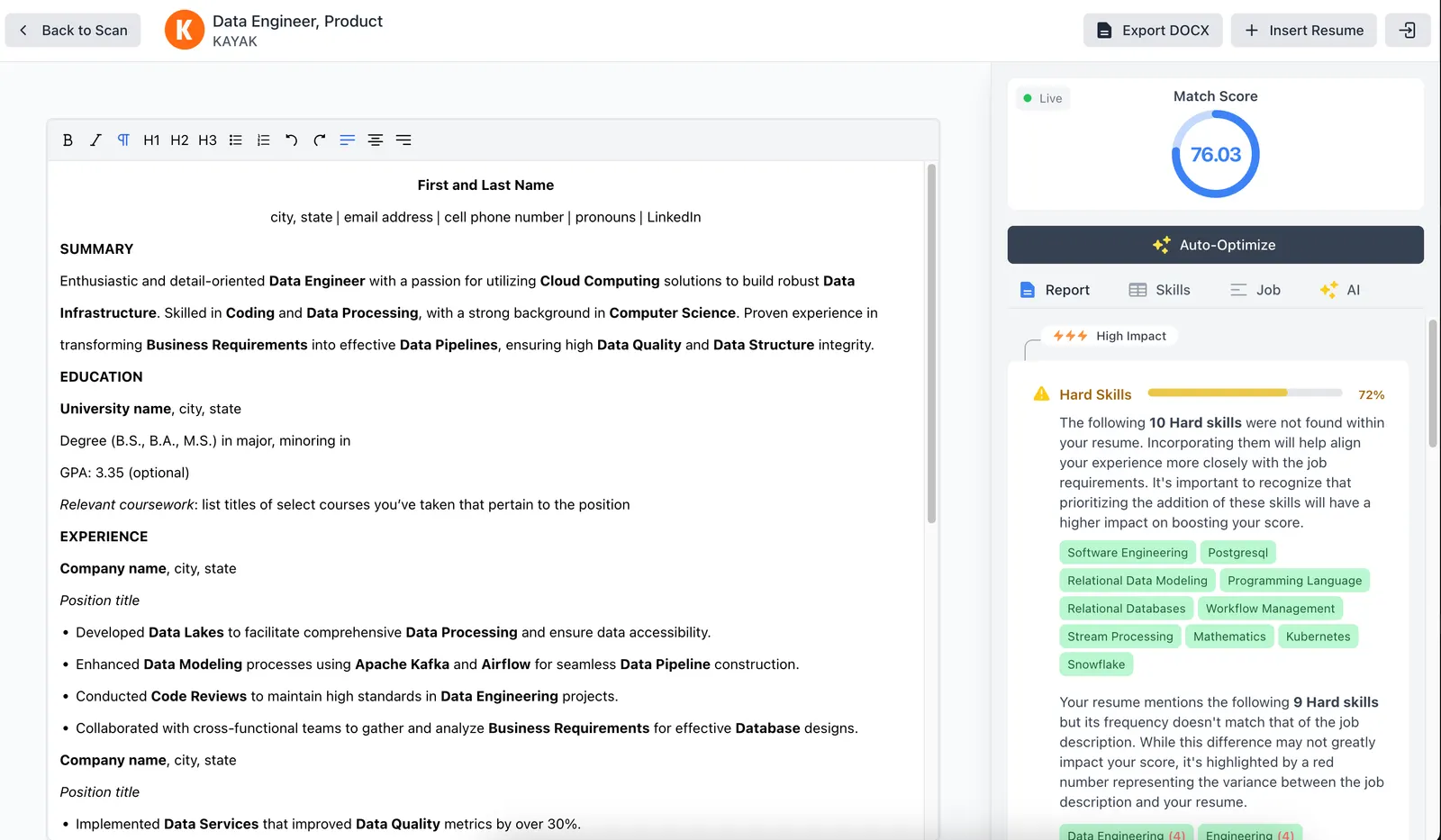
- Rewrite your resume for ATS today. Generic resumes are being filtered out in seconds. Tailor every application: mirror the exact language in the job posting, quantify your achievements with numbers, and remove graphics or tables that ATS systems cannot parse.
- Document your AI exposure now. If you have used any AI tools (ChatGPT, Copilot, Salesforce Einstein, Tableau AI, or anything similar) add it explicitly to your resume and LinkedIn profile. Employers are actively filtering for AI familiarity even in non-technical roles.
- Apply directly to companies hiring in growth sectors. Amazon Web Services, Google Cloud, Palantir, defense contractors like Lockheed Martin and Northrop Grumman, and major health systems are actively posting. Go to their careers pages directly rather than waiting for job boards to surface the listings.
- Activate your severance and benefits clock immediately. If you have received a layoff notice, start your COBRA enrollment window, review your severance agreement (and whether it includes a non-compete), and file for unemployment benefits within the first week. Delays cost real money.
- Network into the hidden market. Estimates suggest 40-50% of roles are filled before they are publicly posted. Reach out to former colleagues, managers, and industry contacts this week, not with a generic message but with a specific ask: a 15-minute call to learn about what they are seeing in their space.
What to Watch Next
The next major data point to track is the August 2026 Challenger, Gray & Christmas report, which will give a full first-half picture of announced cuts and likely signal whether the pace is accelerating or stabilizing. The Bureau of Labor Statistics JOLTS report (released monthly) will show whether the job opening rate is recovering in any sector. Watch the quits rate specifically: a rising quit rate is the clearest signal that workers are regaining confidence and leverage. If DOGE-related federal restructuring moves into a second phase in late 2026, an additional wave of government contractor layoffs could follow, particularly in defense-adjacent IT and administrative services. Job Guide HQ will cover each of these developments as they break.
Editor's Picks
 News
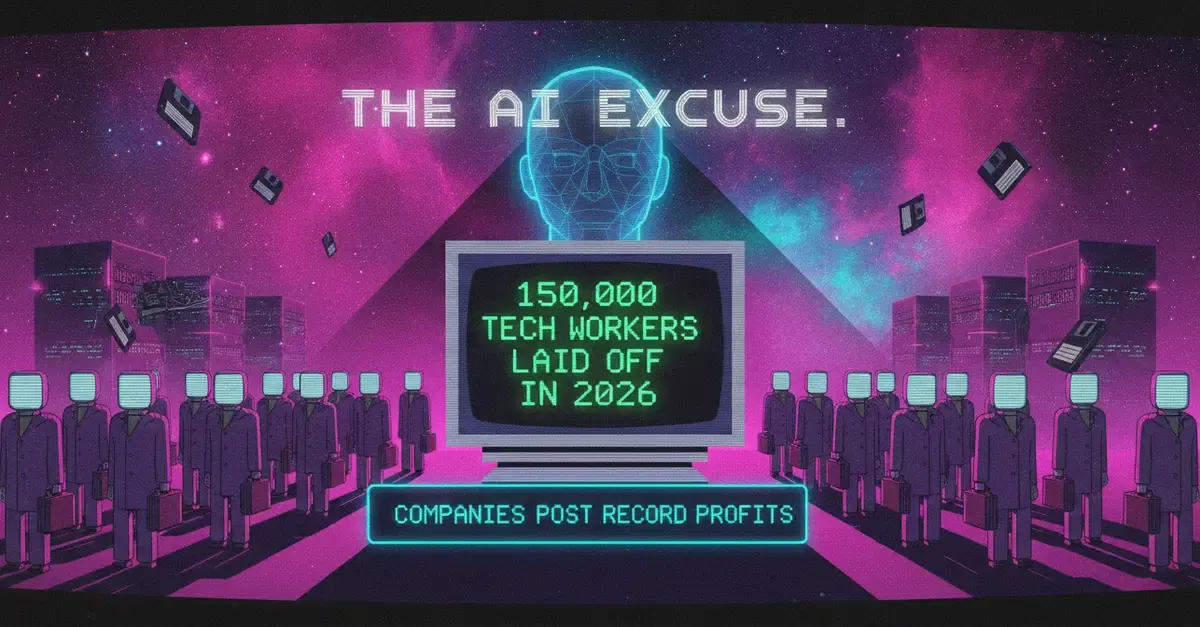
News AI Layoffs 2026: Record Profits, Pink Slips & Jobs That Survive
Jul 20, 2026
 Industries
 AI & ML Engineer Jobs 2026: Salaries, Skills & How to Break In
Jul 20, 2026
 Skills
 AI Skills Non-Tech Workers Actually Need to Get Hired in 2026
Jul 20, 2026
 Job Search
 Hidden Job Market 2026: Land Roles Never Posted Online
Jul 20, 2026