June 2026 Jobs Report: What 57K Payrolls Mean for Your Search
The June 2026 jobs report showed only 57K new payrolls—far below forecasts. Here's what the weak hiring data means for your job search right now.
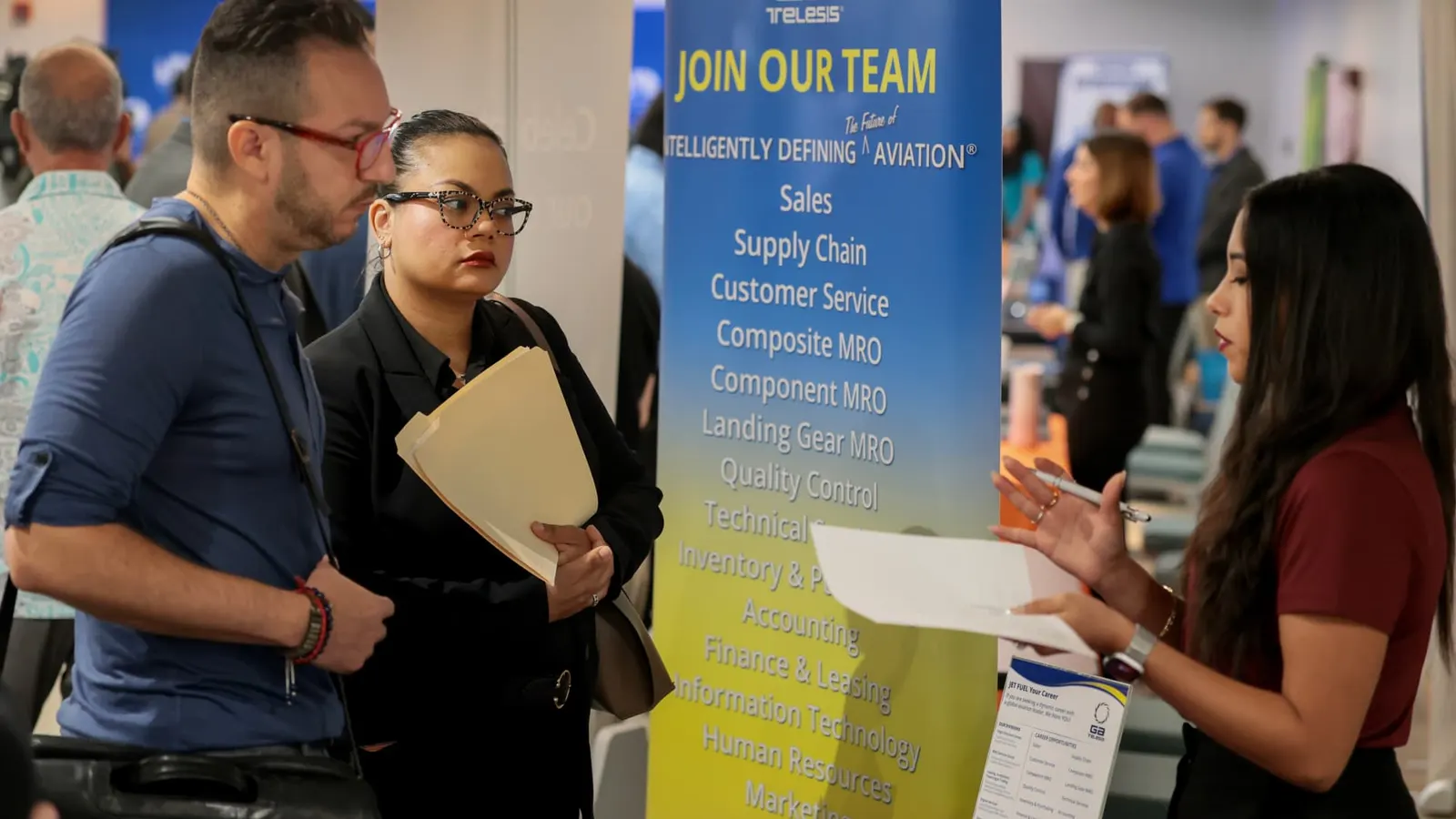
What Happened: The BLS June 2026 Jobs Report (Released July 2, 2026)
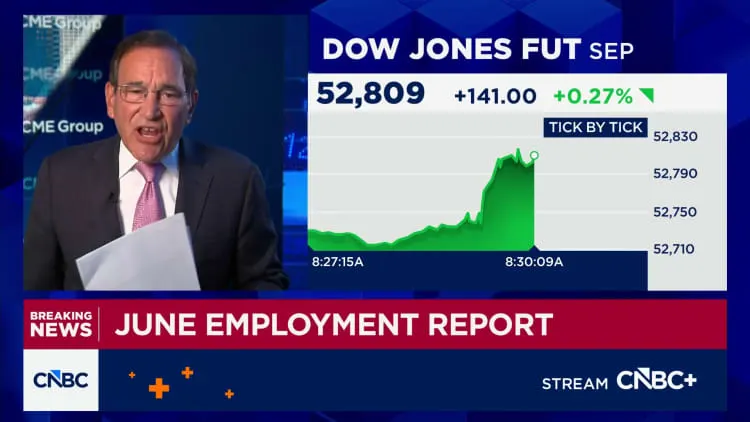
The Bureau of Labor Statistics released its June 2026 Employment Situation Summary on July 2, 2026, and the numbers were a clear miss. Total nonfarm payroll employment rose by just 57,000, roughly half of the 115,000 jobs analysts polled by The Wall Street Journal had forecast, and sharply below May's already downwardly revised gain of 129,000. The unemployment rate ticked down slightly to 4.2 percent, but the details behind that dip are more troubling than reassuring.
What this means if you're job hunting in mid-2026
A 57,000-payroll month in an economy with over 160 million employed workers is not a catastrophe, but it is a real slowdown that every active job seeker needs to understand clearly. The miss wasn't close. Private employers added only 49,000 jobs against a consensus expectation of 110,000. That gap tells you companies pulled back hiring faster and harder than most economists anticipated heading into summer 2026.
For job seekers, a slower-hiring economy means longer search timelines, more competition for each open role, and employers who feel little urgency to move quickly through their pipelines. It also means the sectors still adding jobs become far more valuable targets, and the sectors shedding workers become places to exit or avoid entering. Knowing where the 57,000 jobs actually landed, and where the losses hit hardest, is the most useful thing you can take from this report.
Key numbers & facts at a glance
"The unemployment rate dipped to 4.2% mainly because roughly 720,000 people left the labor force, not because hiring surged."
- +57,000 total nonfarm payrolls added in June (vs. +115,000 consensus forecast)
- +49,000 private-sector payrolls; +8,000 government jobs
- 4.2% official unemployment rate (U-3), down slightly, but driven by labor force exits rather than job gains
- 61.5% labor force participation rate, the lowest since March 2021 and, outside of the COVID disruption, the lowest in 50 years
- 720,000 people left the labor force entirely in June, no longer counted as unemployed
- -74,000 combined downward revision to April and May payrolls, meaning the spring was softer than previously reported
- 7.9% U-6 "broad" unemployment rate (includes discouraged workers and involuntary part-timers), down 0.2 percentage point
- 1.9 million long-term unemployed (27+ weeks jobless), up 286,000 over the past year
- +3.5% year-over-year wage growth; average hourly earnings reached $37.64, up $0.13 (0.3%) in June
Which workers and job seekers feel this first
The June report's pain was not evenly distributed. Here is how the impact breaks down by sector:
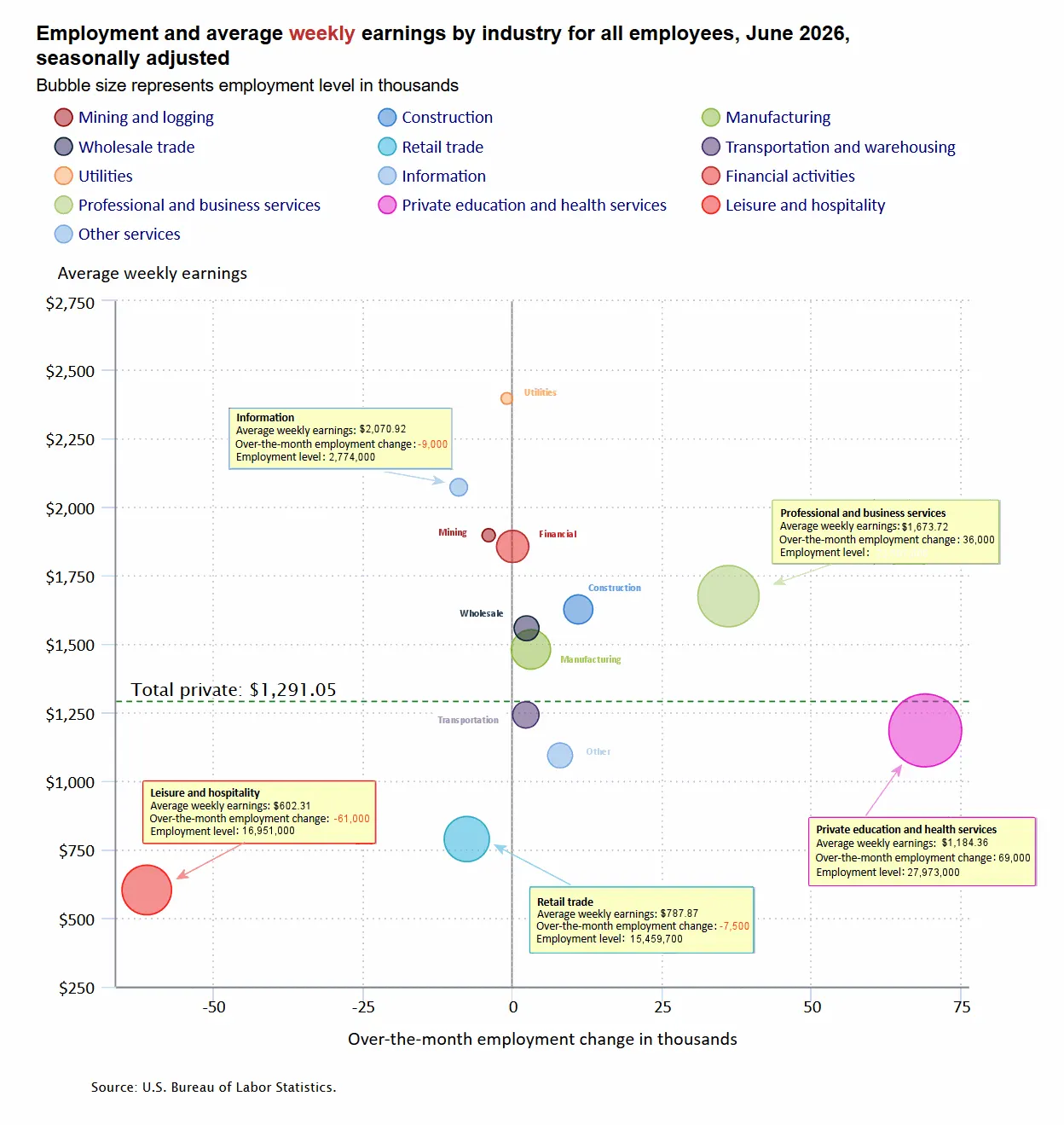
- Leisure and hospitality workers took the biggest hit. The sector shed 61,000 jobs, including 32,900 in food services and drinking places, 21,700 in accommodation, and 9,000 in performing arts and spectator sports. The anticipated World Cup hiring boost (Goldman Sachs had projected +40,000) did not materialize at scale. If you work in hospitality or food service, competition for open roles just got noticeably stiffer.
- Information, retail, and mining workers also saw losses: information lost 9,000 positions, retail trade shed 7,500, and mining dropped 4,000. Anyone in media, publishing, or tech-adjacent information roles should expect a competitive market through at least Q3 2026.
- Long-term job seekers are in a particularly difficult spot. 1.9 million people have been unemployed for 27 weeks or more, accounting for 27.3% of all unemployed people. The longer a search drags on, the harder it gets as competition compounds. Reactivating your strategy is urgent.
- Career changers and entry-level candidates are most exposed to the participation rate collapse. When 6.0 million people who want a job have stopped actively looking, you are competing against a pool that includes many skilled, experienced workers who may re-enter the moment conditions improve even slightly.
What employers and recruiters are doing right now
The hiring behavior in this report tells a consistent story: employers are cautious and leaning toward flexible labor arrangements rather than permanent headcount commitments. The clearest signal in the whole report was the +9,300 gain in temporary help services, part of the broader professional and business services category that added 36,000 jobs in total. Historically, temporary hiring leads full-time hiring. Companies add temp workers before they commit to permanent roles, so a bounce there can mean demand is building. It also means employers are still hedging their bets.
Healthcare and social assistance kept growing, adding a combined 47,000 jobs (healthcare +22,000, social assistance +25,000). These employers are hiring on demographic fundamentals, not economic optimism, which makes them more resistant to a downturn. Management, scientific, and technical consulting added 7,300 jobs, and computer systems design added 4,300, which suggests that specialized, skills-intensive work is holding up even as broader hiring slows.
The leisure and hospitality contraction, on the other hand, reflects employers who anticipated a seasonal bump that never arrived and are now running leaner heading into late summer.
What you should do this week
The report is out. Here is how to turn it into immediate action:
Pivot your target list toward healthcare, social assistance, and professional services. These three categories added the most jobs in June and have structural tailwinds that are unlikely to reverse quickly. Update your job board filters and LinkedIn alerts today to surface roles in these industries.
Apply to temporary and contract roles without hesitation. The 9,300 jump in temporary help services is a real signal. Temp-to-perm pathways are active in this market, and a contract role gives you income, experience, and a foot in the door. All of that becomes a resume asset if the market tightens further.
Reframe your resume around measurable output, not just employment dates. In a slower hiring market, recruiters have more candidates to evaluate. A resume that quantifies impact (revenue generated, costs reduced, volume handled) performs better in applicant tracking systems and with human reviewers than one that lists duties. Go through every bullet point and add a number where you can.
Do not read the 4.2% unemployment rate as a healthy market. The real story is in labor force participation: 720,000 people stopped looking. The true slack in the labor market is larger than the headline suggests, and you should expect more candidates to re-enter and compete against you as conditions shift. Search with urgency now.
Reach out to your network with specific asks, not general check-ins. In a soft hiring market, referrals carry outsized weight because employers want to reduce screening risk. Identify five people in your network connected to target companies or industries and send a specific, short message this week: what you are looking for, why you would be a fit, and one concrete ask (an introduction, a call, or a referral).
If you are in leisure, hospitality, retail, or information: start building toward adjacent roles now. Hospitality operations experience translates to supply chain coordination and facilities management. Retail analytics backgrounds are valued in e-commerce and consumer goods. Do not wait for your sector to recover. Position for a lateral move before you need one.
What to watch next
The next major data point is the July 2026 Employment Situation Summary, expected in early August 2026. It will tell us whether June's weakness was a one-month blip or the start of a sustained deceleration. Watch also for Federal Reserve commentary in July. A jobs miss of this magnitude, combined with falling participation rates, raises the probability that the Fed will hold or adjust rates, which in turn affects business investment and hiring plans. Job Guide HQ will cover both releases with the same sector-level breakdown so you can keep adjusting your search in real time.
Editor's Picks
 News
News AI Layoffs 2026: Record Profits, Pink Slips & Jobs That Survive
Jul 20, 2026
 Industries
 AI & ML Engineer Jobs 2026: Salaries, Skills & How to Break In
Jul 20, 2026
 Skills
 AI Skills Non-Tech Workers Actually Need to Get Hired in 2026
Jul 20, 2026
 Job Search
 Hidden Job Market 2026: Land Roles Never Posted Online
Jul 20, 2026