Ghost Jobs 2026: Which Industries Post the Most Fake Listings?
Ghost jobs are rampant in 2026. Discover which industries post the most fake listings, why it happens, and how to protect your job search from wasted applications.

Ghost Jobs 2026: Which Industries Post the Most Fake Listings?
You spent three hours tailoring your resume, wrote a thoughtful cover letter, and hit apply. Then heard nothing. Ever. Chances are, you didn't fail the screening. The job may never have existed in the first place. Ghost jobs (real-looking postings with no genuine, immediate hiring intent behind them) are one of the most frustrating and least-discussed problems in the 2026 job market. This article tells you exactly which industries are the worst offenders, why they do it, and how to audit any job listing before investing your time.
Why ghost jobs are a bigger problem than ever in 2026
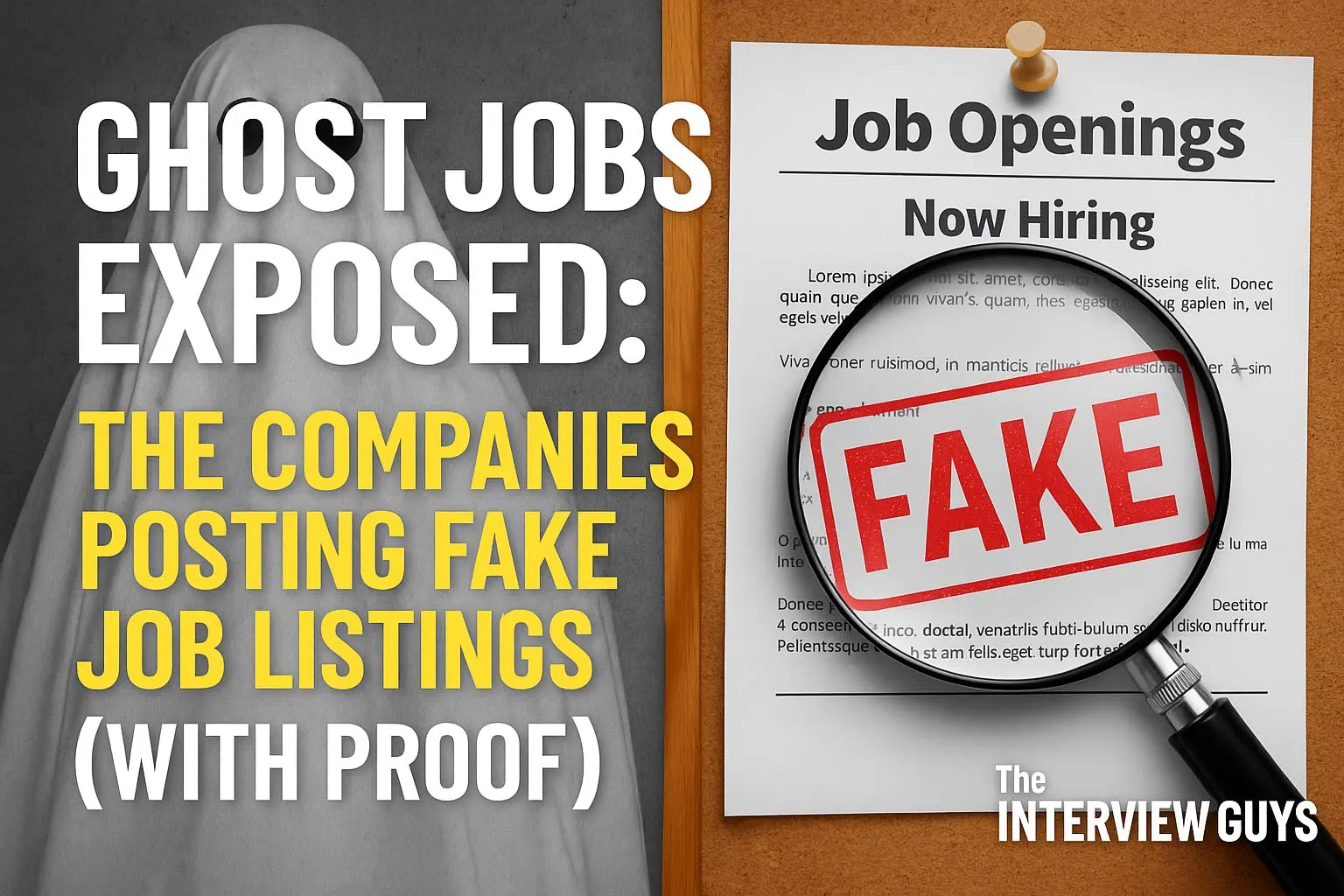
The numbers are staggering. According to a 2025 Clarify Capital survey of 1,000 employers, nearly 1 in 3 employers admits to posting jobs with no current intent to hire. A Greenhouse analysis of hiring platform data puts between 18% and 22% of all online job postings in the "ghost" category, while a ResumeUp.AI audit of LinkedIn estimated that 27.4% of active U.S. postings on that platform alone are likely ghost listings. Across all sources, the true ghost-job rate for a given sector sits somewhere between 20% and 35%.
Bureau of Labor Statistics data makes the scale concrete. In February 2026, the BLS reported 6.9 million job openings but only 4.8 million actual hires. That's a 2.1-million-position gap. A MyPerfectResume analysis of BLS JOLTS data found that 1 in 3 job postings never results in a hire. A Columbia Law Review analysis published in November 2025 showed the hires-per-posting ratio has halved since 2019, dropping from 8 hires per 10 postings to just 4 per 10 by 2024.
The HR community is largely aware and largely complicit. A LiveCareer survey of 918 HR professionals in March 2025 found:
- 45% of HR professionals admit they regularly post ghost jobs
- 48% say they post them occasionally (for pipeline-building, seasonal prep, or ATS roster management)
- Combined, 93% engage in the practice to some degree
- Only 2% say they never post ghost jobs
For job seekers, this means a meaningful portion of every application batch is going nowhere. Not because of your qualifications, but because the role was never real.
Which industries post the most ghost jobs: a sector-by-sector breakdown

Not all industries ghost equally. The data reveals a clear hierarchy, driven by compliance requirements, talent competition, labor shortages, and investor optics. Here's what the evidence shows.
Government: ~60% ghost job rate (the worst offender)
The public sector tops every credible analysis. A 2025 Columbia Law Review study of BLS JOLTS data estimated that roughly 60% of government job postings are ghost listings, six out of every ten open roles. The reason is largely structural: federal and state agencies are legally required to post openings publicly, even when an internal candidate has already been identified or when the role is budget-frozen pending approval. The posting exists to satisfy process, not to recruit externally. If you're targeting government roles, apply strategically and pursue informational contacts inside agencies who can tell you whether a role is genuinely open.
Education and health services: ~50% ghost job rate
The Columbia Law Review analysis places education and health services at approximately 50%, one in two postings. The cause is more nuanced than in government. Healthcare and education both face genuine, chronic labor shortages: there legitimately aren't enough qualified nurses, specialists, teachers, or administrators to fill every opening. Many listings stay live for months or years not because hiring is fake, but because supply never catches up with demand. That said, a meaningful share of these persistent postings are also ghost jobs in the classic sense, posted to maintain ATS databases or signal institutional growth. Treat healthcare and education postings with cautious optimism and confirm any role is actively hiring before investing significant customization time.
Technology and information: ~48% ghost job rate
Among private industries, technology has the highest ghost-job concentration, with an estimated 48% of open listings never resulting in a hire. Tech companies post speculatively because engineering and product talent is fiercely competitive; they want a pipeline of candidates even when no role is immediately funded. The layoff waves of 2023 to 2025 made this worse, as companies cut headcount but kept legacy postings live to project growth to investors and the press. One hard data point captures the dysfunction: technology companies respond to only 5% of applications, compared to healthcare's 20% response rate. That's a stark signal of how many tech postings lack any active hiring intent. If a tech company has cut 10% or more of its workforce in the last six months but still shows dozens of open roles, treat those listings as likely ghosts.
Finance and professional services: ~25-30% ghost job rate
Finance and professional services sit at an estimated 25-30% ghost rate, driven largely by compliance-driven external posting requirements. Many financial institutions must post roles publicly before filling them internally, a regulatory artifact similar to government's problem. Investment banks, consulting firms, and insurance companies also maintain "evergreen" postings for roles they fill on a rolling basis, meaning the listing is real in principle but may not reflect an active, immediate search.
Retail, hospitality, and leisure: ~15-20% ghost job rate
Consumer-facing industries like retail and hospitality post ghost jobs too, but at lower rates, partly because turnover is high and genuine hiring is more continuous. Ghost postings in these sectors tend to be seasonal preparation, listings published weeks or months before a hiring push actually begins. The gap between posting and hiring is real but often time-bound rather than indefinite.
A quick-reference industry ghost-job rate table
| Industry | Estimated Ghost Job Rate | Primary Driver |
|---|---|---|
| Government | ~60% | Compliance posting before internal fill |
| Education & Health Services | ~50% | Labor shortages + ATS pipeline |
| Technology & Information | ~48% | Speculative hiring + investor optics |
| Finance & Professional Services | ~25-30% | Regulatory posting requirements |
| Retail, Hospitality & Leisure | ~15-20% | Seasonal prep, high turnover cycles |
How to detect a ghost job before you apply
Knowing which sectors are worst is only half the battle. Here's a concrete process for auditing a listing before you spend time on it.
Step 1: Check the posting date and repost history
Any listing that has been live for more than 30 days without modification is a yellow flag. More than 60 days is a red flag. Use LinkedIn's "Posted X days ago" indicator or filter your job board search to the past two weeks. If the same role keeps reappearing with a refreshed date but identical copy, that's a classic ATS auto-renewal ghost.
Step 2: Cross-reference against company news
Before applying to any tech or finance role, spend five minutes checking the company's recent headlines. Tools like Layoffs.fyi, LinkedIn's "People" tab, and the company's own press releases will tell you if headcount has shrunk while the posting count hasn't. A company that laid off 15% of staff in Q1 2026 but lists 40 open engineering roles almost certainly has ghost postings in that mix.
Step 3: Search for the hiring manager on LinkedIn
Find the team the role would sit on and look at the hiring manager or department head's profile. Have they posted anything about building the team? Have recent LinkedIn posts mentioned onboarding or recruiting? If the team page shows no recent activity and no obvious open-seat gaps, that's a meaningful signal.
Step 4: Call or email the recruiter directly
This feels old-fashioned, but it works. Find the recruiter's email (often findable via Hunter.io or LinkedIn) and send a three-sentence note: confirm the role is actively being filled, ask about the timeline, and express specific interest. A ghost posting will return silence or a canned "we'll keep your resume on file" response. An active search will get a reply within a few business days.
Step 5: Triangulate with Glassdoor and LinkedIn insights
Check Glassdoor's "Jobs" tab for the company. If interview reviews for this role type are years old and sparse, there may be little real interviewing happening. On LinkedIn, the "How you match" section now often shows how many applicants have applied. If a role has 500+ applicants and was posted 45 days ago with no update, factor that into your decision.
Common mistakes job seekers make with ghost jobs
Applying to every listing without auditing it first. Volume-based job searching feels productive but wastes hours on roles that will never respond. Apply to fewer, better-vetted roles.
Blaming yourself for the silence. Non-response from a ghost posting is not feedback on your resume or qualifications. Treating every silence as a signal to rewrite your materials will send you in circles.
Ignoring posting age on job boards. Indeed, LinkedIn, and ZipRecruiter all allow companies to auto-renew listings. Always filter to "past 14 days" as your default view and only expand the window deliberately.
Assuming big-brand companies have real openings. Some of the worst ghost-job offenders are recognizable tech and finance giants. Name recognition is not a proxy for active hiring.
Not using direct outreach as a filter. Most job seekers skip the step of contacting a recruiter before applying. That one email is your best single tool for confirming a posting is live.
Counting applications instead of conversations. A healthy job search is measured by recruiter conversations per week, not applications submitted. If you're sending 30 applications a week and getting zero responses, ghost postings are likely a major factor.
Tools and platforms to protect your search from ghost jobs
Use these resources to vet listings, find real opportunities, and track your search efficiently.
| Tool / Platform | What It Does | Best For |
|---|---|---|
| Layoffs.fyi | Real-time database of tech and startup layoffs | Cross-referencing tech company headcount vs. open roles |
| LinkedIn "Posted Date" filter | Filter listings by recency | Eliminating stale, auto-renewed ghost postings |
| Hunter.io | Finds professional email addresses by domain | Reaching recruiters directly to confirm active roles |
| Glassdoor "Interviews" tab | Shows recent interview activity by role | Checking if a company is genuinely interviewing |
| BLS JOLTS monthly data | Tracks hires vs. openings by sector | Sector-level macro context for your industry |
| LinkedIn "People" tab | Shows recent hires and departures | Spotting actual team movement at target companies |
| Google: site:linkedin.com/jobs "[Company]" "[Role]" | Finds current and archived postings | Checking if a role has been posted continuously |
How to adapt your strategy based on your situation
If you're targeting government or public sector roles
Don't let the 60% ghost rate discourage you entirely. It means your strategy must change. Prioritize networking inside agencies over cold applications. Attend public-sector job fairs, connect with current employees on LinkedIn, and use USAJobs.gov's "Who May Apply" filter to identify roles that are genuinely open to external applicants rather than only to current federal employees. When you do apply, follow up with the HR point of contact listed in the posting. Government postings are required to include one.
If you're a tech professional navigating layoff-era listings
In 2026, the tech job market has split in two: genuine high-demand roles in AI, ML infrastructure, and cybersecurity on one side, and a sea of legacy postings from companies still performing normalcy on the other. Focus your search on companies with verified recent funding rounds (Crunchbase, PitchBook) or consistent headcount growth on LinkedIn. Use the direct-outreach audit step above before any application. Tech recruiters who are actively hiring will respond; those managing ghost pipelines won't.
If you're an entry-level or career-change applicant
You're especially vulnerable to ghost jobs because you're already applying to a large volume of roles. Narrow your target list to companies where you have at least one existing connection (alumni network, LinkedIn mutual, industry event), and treat every application as a networking touchpoint rather than a form submission. A brief LinkedIn message to someone on the team ("I just applied to X role and would love to hear about your experience there") serves double duty as an authenticity check and a relationship starter.
Ghost job audit checklist for 2026
Use this before every application:
- The posting was published within the last 14-30 days
- The listing has not been reposted with the same text under a new date
- The company shows no major recent layoffs (checked Layoffs.fyi)
- LinkedIn's company "People" tab shows recent hires in similar roles
- Glassdoor shows recent interview activity for this role type
- I have identified the recruiter or hiring manager associated with this role
- I have sent or plan to send a direct outreach message to confirm the role is active
- I am not applying to this role based on brand name alone
- The role's response window expectation is realistic for the sector (tech: 2-4 weeks; government: 6-12 weeks)
- I am tracking this application in a system with a follow-up reminder date
Frequently asked questions about ghost jobs
What exactly is a ghost job? A ghost job is a job listing posted by an employer with no genuine, immediate intent to fill the role externally. Reasons range from building passive candidate pipelines and satisfying HR compliance requirements to projecting growth to investors or simply forgetting to take a filled role down. The posting looks real but typically leads to no interviews or hires.
How can I tell if a job posting is a ghost job before applying? Check the posting date (anything over 30 days old is a yellow flag), cross-reference the company's recent layoff news, look for recent interview activity on Glassdoor, and send a brief email or LinkedIn message to the recruiter to confirm the role is actively being filled. Silence in response to that outreach is a strong ghost-job signal.
Are ghost jobs illegal? In most jurisdictions, ghost jobs are not illegal. They're an unethical but widespread practice. Some countries and U.S. states have begun exploring truth-in-advertising regulations for job postings, but as of mid-2026 there is no broad legal prohibition. The practice is governed primarily by professional norms and platform policies, not law.
Which job boards have the most ghost jobs? Ghost jobs appear across all major platforms, but boards that allow easy auto-renewal of listings, including LinkedIn, Indeed, and ZipRecruiter, tend to accumulate more stale postings. Niche industry boards and direct company career pages often have a higher proportion of genuine openings because posting and maintaining them requires more deliberate effort.
Should I still apply to jobs in high-ghost-rate industries like tech or government? Yes, but apply differently. Use direct outreach to verify active searches, network inside target organizations, prioritize recent postings, and apply to fewer, better-researched roles rather than casting a wide net. The goal is to convert your applications into conversations, which is only possible when you're targeting listings with real hiring intent behind them.
Editor's Picks
 News
News AI Layoffs 2026: Record Profits, Pink Slips & Jobs That Survive
Jul 20, 2026
 Industries
 AI & ML Engineer Jobs 2026: Salaries, Skills & How to Break In
Jul 20, 2026
 Skills
 AI Skills Non-Tech Workers Actually Need to Get Hired in 2026
Jul 20, 2026
 Job Search
 Hidden Job Market 2026: Land Roles Never Posted Online
Jul 20, 2026