Beat ATS Semantic Filters in 2026: Beyond "Project Management
Learn how ATS semantic filters work in 2026 and go beyond "project management" with proven resume strategies that pass AI screening and reach real recruiters.
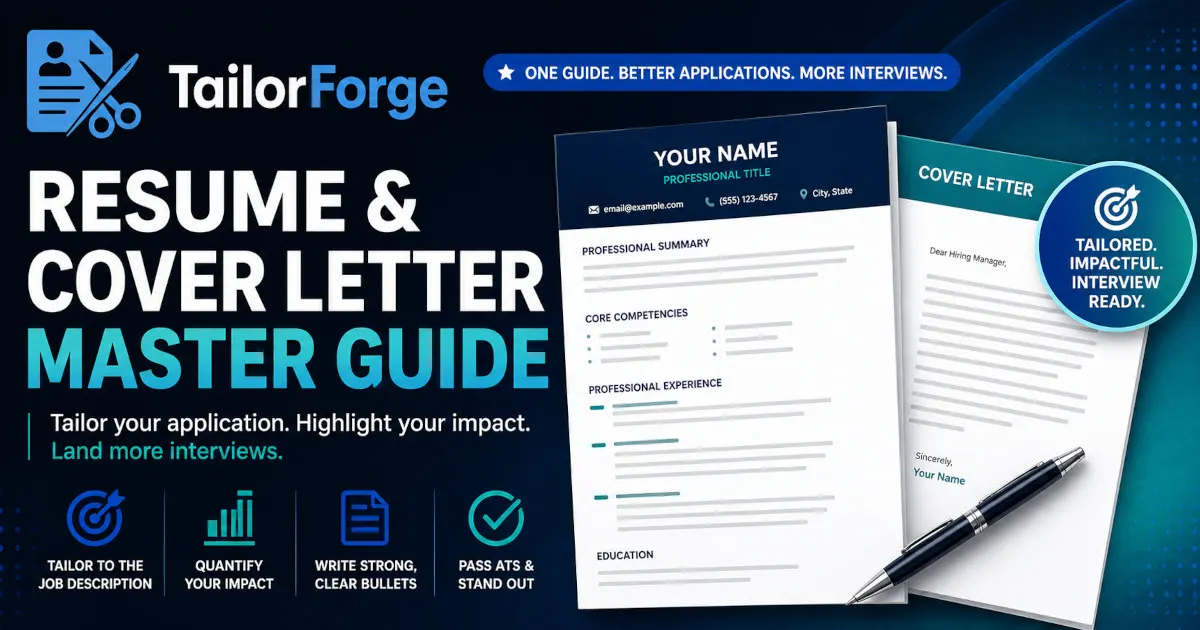
Beat ATS semantic filters in 2026: beyond "project management"
You submitted a strong resume. You have the experience. You even made sure to include the phrase "project management" exactly as it appeared in the job description. And yet, nothing. No callback, no automated acknowledgment beyond the confirmation email. In 2026, that silence is almost certainly not about your qualifications. It's about how you described them.
The problem isn't that you're underqualified. The system evaluating your resume before any human sees it has moved far beyond counting keyword matches, and most job seekers are still optimizing for the old rules. Over 97% of Fortune 500 companies now use an ATS, and the median resume scores just 48 out of 100 on first submission, with 51% of candidates never clearing the minimum threshold before any optimization. That gap is costing real people real opportunities. This article explains exactly how the 2026 screening layer works and gives you a concrete system to beat it.
Why "project management" is no longer enough

For most of the 2010s, ATS systems were glorified keyword databases. You said "project management," the job description said "project management," the system gave you a point. Optimization meant copy-pasting phrases from the posting. That era is over.
From 2020 to 2023, ATS platforms largely used exact keyword matching. Starting in 2024, major platforms introduced semantic matching, which is the ability to understand that "program management," "initiative leadership," and "cross-functional coordination" are conceptually related to "project management," each with a confidence score rather than a binary match. By 2026, the leading systems have moved to what the industry calls skills-graph matching: a layered model that maps relationships between skills, roles, industries, and outcomes. Roughly 68% of enterprise ATS platforms now incorporate semantic understanding powered by large language models and natural language processing.
Here is the insight most resume guides miss: semantic matching is not the death of keywords. It is a more sophisticated layer on top of them. The system is no longer asking "does this word appear?" It's asking "does the context around this word prove the candidate actually has the skill?" According to the 2026 Global Talent Acquisition Report, over 78% of initial screenings now use semantic search and NLP to determine not just whether a keyword appears, but whether the surrounding context confirms the underlying competency. A keyword that appears without supporting evidence gets flagged as "Low Intent," essentially treated as stuffed and discounted. That means keyword stuffing, the old shortcut, is now actively harmful.
How semantic scoring actually works (so you can game it correctly)

Before you rewrite a single bullet, you need to understand the mechanical process you're writing for. Modern AI-powered ATS systems do three things simultaneously:
- Parse your resume using NLP to extract skills, titles, tenures, and outcomes, with 85-95% accuracy on well-formatted documents.
- Map extracted concepts to a skills graph, which clusters related terms. "Machine learning," "ML," "predictive modeling," and "statistical learning" are nodes in the same cluster. "Led a cross-functional team" maps to the "leadership" cluster even without the word "leadership" appearing.
- Generate a ranked confidence score by comparing your skills graph profile to the job description's skills graph profile, then weight the results against historical hiring data from the platform.
Most enterprise platforms in 2026 run hybrid search: keyword and semantic queries fire simultaneously, and results are merged using a weighted relevance score. This means you still need exact-match terms and the semantic context that confirms them. Neither alone is enough.
What the system hunts for is "semantic intent," which is evidence that a skill you claim is real. If you write "strategic leadership" without neighboring concepts like stakeholder buy-in, resource orchestration, or risk mitigation, the algorithm treats the phrase as an unverified assertion. If you write "aligned 14 cross-functional stakeholders across three business units to deliver a $2.4M infrastructure rollout on schedule," the system maps that sentence to leadership, stakeholder management, budget ownership, and cross-functional coordination, all from one bullet.
6 steps to rewrite your resume for semantic ATS in 2026
Step 1: run a skills-cluster audit on the job description
Action: Copy the job description into a plain text document. Highlight every skill, responsibility, and outcome phrase. Group synonyms and related terms into clusters manually, or use a tool like Jobscan, Teal, or Resume Worded.
Why it matters: You're not looking for a list of keywords to paste. You're mapping the skills graph the employer is using. A posting that mentions "project management," "stakeholder communication," and "on-time delivery" is describing one cluster, not three separate requirements.
Decision rule: If a cluster appears in the posting more than twice across different sections, treat it as a primary cluster and make sure it has at least two supporting semantic markers in your resume.
Step 2: write "proof sentences," not keyword containers
Action: For each primary cluster, write at least one bullet that contains the anchor term plus two or three neighboring concepts that provide contextual evidence.
Template: [Action verb] + [scope/scale] + [specific method or tool] + [quantified outcome] + [stakeholder or context detail]
| Before | After |
|---|---|
| "Managed projects across multiple teams." | "Coordinated delivery of 11 concurrent software releases across product, engineering, and QA teams, reducing average cycle time by 22%." |
| "Led project management efforts for key initiatives." | "Drove end-to-end program governance for a $1.8M CRM migration, aligning six department heads and hitting the go-live date three weeks ahead of schedule." |
| "Strong strategic leadership skills." | "Orchestrated a resource reallocation strategy during a budget freeze, maintaining 94% of planned deliverables by reprioritizing across three product lines." |
The first version of each bullet contains the keyword. The second version contains the keyword and its semantic neighborhood. That's the difference between a claim and proof.
Step 3: deploy the synonym layer deliberately
Action: For each primary cluster, include at least one synonym or related term in addition to the anchor keyword. This signals to the skills graph that you understand the domain, not just the phrase.
Synonym map for common clusters:
| Anchor term | Semantic neighbors to include |
|---|---|
| Project management | Program governance, milestone tracking, cross-functional coordination, risk mitigation, delivery oversight |
| Data analysis | Quantitative insight, trend identification, dashboard reporting, SQL/Python/Tableau (where true), data-driven decision-making |
| Strategic leadership | Stakeholder alignment, resource orchestration, executive communication, organizational buy-in |
| Customer success | Client retention, churn reduction, NPS improvement, renewal management, escalation resolution |
| Software development | Agile/Scrum (where true), sprint planning, code review, CI/CD, deployment pipelines |
Rule: Never include a synonym that doesn't truthfully describe your experience. Semantic systems are increasingly cross-referencing claims against the specificity of your evidence. Vague synonyms without supporting detail get flagged just like bare keywords.
Step 4: restructure your skills section as a signals layer, not a dump
Action: Eliminate long, undifferentiated lists of skills ("Excel, PowerPoint, Jira, Confluence, Slack..."). Instead, organize skills into labeled clusters that mirror the job description's language.
Before:
Skills: Excel, PowerPoint, Jira, Confluence, Slack, Asana, MS Project, Agile, Scrum, Kanban, PMP
After:
Project delivery: Agile/Scrum, Kanban, MS Project, Jira | Stakeholder communication: Executive reporting, cross-functional alignment | Tools: Confluence, Asana, Slack
Clustering your skills trains the parser to read them as domain competencies, not a random string of tokens. It also makes the resume more legible to the 99.7% of recruiters who use keyword filters when they manually search the database.
Step 5: optimize your resume header and summary for the semantic lead
Action: Write a 2-3 sentence professional summary that includes your target job title (matching the posting's exact language), one primary cluster anchor term, and one quantified proof point.
Template:
[Target title] with [X] years driving [primary cluster outcome] in [industry/context]. Known for [semantic neighbor 1] and [semantic neighbor 2] that deliver [quantified result]. [Optional: credential or industry context sentence.]
Example:
Senior Program Manager with 9 years driving cross-functional delivery and stakeholder alignment in enterprise SaaS environments. Known for translating complex technical roadmaps into executive-ready governance frameworks that have consistently cut time-to-launch by 15-30%. PMP-certified; experienced across Agile and waterfall methodologies.
This summary hits: title match, program management cluster, stakeholder alignment, delivery, quantified outcomes, and a credential, without reading like a keyword list.
Step 6: format for parser clarity
Action: Remove tables, text boxes, headers/footers, and graphics from your resume file. Use a clean single-column or two-column layout with standard section headings (Work Experience, Education, Skills, Certifications). Submit as a .docx or clean PDF.
Why it matters: ATS parsers with 85-95% accuracy achieve that accuracy on standard-format documents. Complex layouts, embedded graphics, or text in headers can cause critical information to be skipped entirely, making your semantic optimization invisible. Proper optimization lifts the median score by an average of 17 points. Poor formatting can negate that gain before the content is even read.
How this changes for different job seekers
Career changers
Your challenge is that your anchor terms may not match the posting's clusters because you come from a different industry with different vocabulary. The fix: lead with transferable proof sentences, not transferable skills claims. "Managed vendor relationships" from a retail background maps to "supplier management" in operations if your bullet includes scope, outcomes, and stakeholder context. Let the semantic layer do the translation, but give it enough evidence to work with. Explicitly include the target industry's anchor terms in your summary, then support them with bullets from your prior role.
Recent graduates and entry-level candidates
You likely don't have work history to draw semantic depth from, so lean harder on academic projects, internships, volunteer work, and coursework. The same proof-sentence structure applies: scope plus method plus outcome. "Led a 4-person capstone team to develop a demand-forecasting model in Python, improving prediction accuracy by 18% over baseline" contains a leadership cluster, a technical cluster, and a quantified outcome, even with zero years of experience.
Senior and executive candidates
The risk at senior levels is over-relying on prestigious titles and company names, assuming they speak for themselves. Skills-graph systems don't score prestige; they score demonstrated competency clusters. A VP-level candidate who writes "responsible for the P&L of a $40M business unit" without semantic neighbors (cost optimization, revenue strategy, team leadership, board communication) is leaving significant score points on the table. At the senior level, every bullet should contain at least three distinct semantic nodes.
Industry-specific roles (healthcare, tech, finance)
Highly regulated or technical fields use specialized vocabulary that may not map cleanly to generalist semantic graphs. In these cases, include both the technical term and the plain-language equivalent. "Managed IND submission timelines" should be accompanied by context a generalist parser can score: "cross-functional coordination across regulatory, clinical, and CMC teams to meet FDA submission deadlines." You're writing for two audiences at once: the specialized recruiter and the generalist AI.
Mistakes that will get you filtered out in 2026
- Keyword stuffing in a hidden white-font section. Modern parsers detect formatting anomalies and flag the document. This approach actively lowers your score. Fix: delete it entirely.
- Using only the exact phrase from the job description and nothing else. A lone anchor term without semantic neighbors scores as "Low Intent." Fix: add two supporting concepts to every primary skill claim.
- Writing a skills section as a single undifferentiated comma list. Parsers read this as a string of tokens, not domain competencies. Fix: cluster and label your skills by domain.
- Putting critical information in headers, footers, or text boxes. Many parsers skip non-body content. Your name and contact information may not be extracted. Fix: use the main document body for all content.
- Submitting a heavily designed resume (infographic style) as a PDF. Design elements interrupt parsing. The median score drop on complex-layout resumes is significant. Fix: keep design minimal and use a clean, ATS-safe template.
- Ignoring the professional summary. The summary is parsed first and weighted heavily as a semantic signal for role fit. A blank or generic summary is a missed opportunity. Fix: write a targeted, evidence-backed 2-3 sentence summary for every application.
Your ATS semantic optimization checklist
Use this before submitting any application in 2026.
Skills-graph audit
- I identified 3-5 primary skill clusters in this job description
- Each cluster has an anchor term and 2-3 semantic neighbors noted
Bullet-point quality
- Every primary cluster has at least one "proof sentence" bullet with scope plus method plus outcome
- No bullet is a bare keyword claim without supporting context
- At least 60% of bullets include a quantified result
Summary section
- My summary includes the exact job title from the posting
- My summary contains at least one anchor term and one quantified outcome
- My summary reads as a human-written claim, not a keyword list
Skills section
- Skills are grouped into labeled clusters, not a flat list
- All listed skills are truthful and appear in the body of the resume with evidence
Format and file
- No text boxes, tables inside the resume body, headers/footers with key info, or graphics
- File submitted as .docx or clean single-layer PDF
- Standard section headings used (Work Experience, Education, Skills, Certifications)
Final check
- I ran the resume through at least one ATS simulation tool (Jobscan, Teal, or Resume Worded)
- My score improved from baseline before submitting
Frequently asked questions
Does semantic matching mean I no longer need to include exact keywords from the job description? No. Most enterprise ATS platforms in 2026 use hybrid search, running keyword and semantic queries simultaneously. You still need exact-match anchor terms from the posting. What semantic matching adds is the requirement that those terms appear with contextual evidence, not in isolation. Include the exact phrase and the supporting semantic neighbors.
How do I know which ATS a company is using?
You often can't know with certainty, but you can make educated guesses. Large enterprises (500-plus employees) predominantly use platforms like Workday, iCIMS, Greenhouse, or Taleo. The application portal URL often reveals the platform (e.g., myworkdayjobs.com or icims.com). Optimizing for hybrid semantic search, the standard across all major platforms, is the safest universal strategy.
Is a one-page resume better for ATS scoring? Page length itself is not directly scored by ATS. What matters is content density and relevance. A two-page resume with two pages of high-scoring semantic proof sentences will outperform a one-page resume with sparse, low-context bullets. That said, keep your most relevant experience in the top half of page one, as human recruiter attention drops sharply after initial ATS filtering produces a shortlist.
Can I use the same resume for every application? A base resume is fine as a starting point, but you should tailor the summary, the primary cluster vocabulary, and at least 2-3 key bullets for each application. ATS scores are calculated against a specific job description's skills graph. A resume optimized for one posting will score differently against another. The tailoring doesn't have to be a full rewrite: adjusting your summary and top bullets typically takes 15-20 minutes per application.
What's the fastest way to check if my resume will pass ATS screening? Run it through a free ATS simulation tool. Jobscan, Teal, and Resume Worded all offer free-tier analyses that score your resume against a job description and flag missing clusters. The 17-point average score improvement from proper optimization is achievable in under an hour with these tools. Aim for a match score above 75% before submitting to any role you're serious about.
Editor's Picks
 News
News AI Layoffs 2026: Record Profits, Pink Slips & Jobs That Survive
Jul 20, 2026
 Industries
 AI & ML Engineer Jobs 2026: Salaries, Skills & How to Break In
Jul 20, 2026
 Skills
 AI Skills Non-Tech Workers Actually Need to Get Hired in 2026
Jul 20, 2026
 Job Search
 Hidden Job Market 2026: Land Roles Never Posted Online
Jul 20, 2026