Skills-Based Resume 2026: Land a Career Change With Wrong Experience
Learn how to build a skills-based hybrid resume in 2026 that wins career change interviews — even when your work history seems "wrong" for the role.
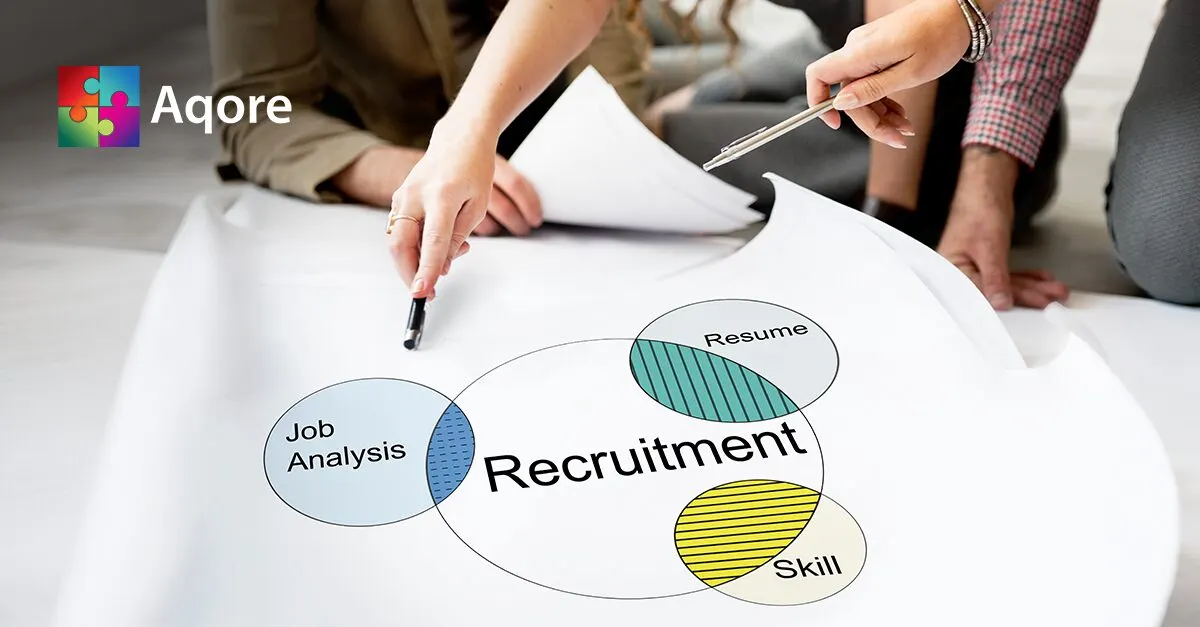
Skills-based resume 2026: land a career change with the wrong experience
You spent a decade in one field. Now you want something completely different. You sit down to update your resume and hit a wall: everything on it screams the career you're leaving, not the one you're chasing. So you Google "career change resume" and every result tells you the same thing: use a functional resume to hide your irrelevant experience. That advice is outdated, it actively hurts your chances, and in 2026's hiring market, it can get your application auto-rejected before a human ever reads your name.
Here's where things actually stand: career changing is no longer unusual. About 52% of American employees are considering a career change right now, and Gen Z workers are projected to hold up to 17 jobs across 7 different careers over their working lives. Meanwhile, the hiring market has shifted in a way that directly benefits people making a pivot. 81% of U.S. employers now use skills-based hiring, up from just 57% in 2022. The question in 2026 is no longer "do I have the right degree?" It's "have I named the right skills, in the right language, with the right evidence?" This guide shows you exactly how to do that.
Why your work history isn't the problem, your format is
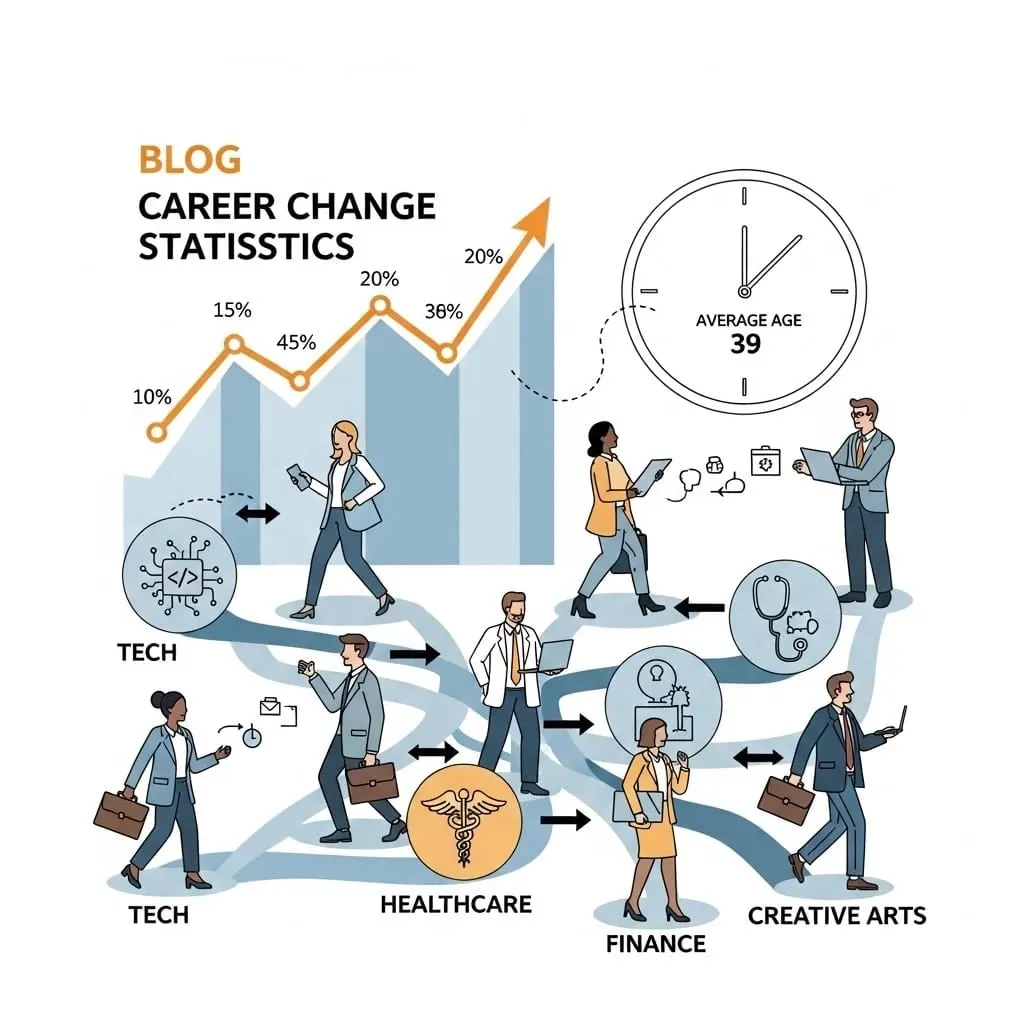
The standard career advice for career changers is to use a functional (skills-only) resume, a format that groups your abilities under competency headings and buries your work history at the bottom. The logic sounds reasonable: lead with skills, hide the "wrong" experience. In practice, this format is a trap.
A 2025 SHRM survey found that 63% of recruiters view functional resumes negatively, treating them as a signal that the candidate is hiding something problematic. More critically, Applicant Tracking Systems (ATS), which screen the vast majority of corporate job applications before a human sees them, are built to parse chronological data. When skills aren't tied to a specific employer and employment dates are absent or buried, the ATS may calculate your total experience as zero and filter you out automatically. Chronological and hybrid resume formats parse at 92-97% accuracy across major ATS platforms like Workday and Greenhouse. The functional format drops to 70-85% and carries auto-reject risk on legacy systems.
The right tool for a career change in 2026 is the hybrid (combination) resume, a format that leads with a prominent skills section, then presents a condensed chronological work history underneath. You get the skills-first signal that 76.4% of recruiters now prioritize (per Huntr 2026 data) without sacrificing the employment timeline that ATS systems and hiring managers use to evaluate candidates. This is the foundation everything else in this guide builds on.
How to build your skills-based hybrid resume: step by step

Step 1: audit your transferable skills before you write a single word
Before you touch your resume document, open a blank page and do a skills inventory. Look at 5-10 job postings for your target role. Highlight every skill, tool, or competency that appears repeatedly, these are your target keywords. Then go through your entire career history and ask: Where did I actually use or demonstrate this? You're looking for transferable skills, abilities that are valuable in your new field even if you built them somewhere completely different. A teacher has curriculum design (instructional design, L&D). A military logistics officer has supply chain management. A customer service lead has stakeholder communication and conflict resolution. Write down every match you find, with a specific example attached to each.
Decision rule: If you can attach a result or a situation to a skill, it's usable. If you can only say "I have this skill," it's not strong enough yet.
Step 2: write a targeted professional summary, not an objective statement
Ditch the objective statement ("Seeking a position in marketing where I can leverage my skills..."). Replace it with a 3-5 sentence professional summary that explicitly positions you for your target role. Name the role or field directly, call out your most relevant transferable skills by name, and include one quantified achievement that demonstrates your value. Your summary should do the translation work for the recruiter. Don't make them figure out why a teacher is applying for a project management role.
Fill-in-the-blank template:
[Target job title]-focused professional with [X] years of experience in [transferable adjacent field], bringing demonstrated expertise in [Skill 1], [Skill 2], and [Skill 3]. In my previous role as [Former Title], I [specific achievement with a number]. Now applying that foundation to [specific aspect of target role/industry].
Before (objective statement):
"Former nurse seeking a role in healthcare sales where I can use my people skills."
After (professional summary):
"Clinical-to-commercial professional with 8 years in acute care nursing, bringing patient education, needs assessment, and relationship management skills to medical device sales. Consistently ranked in the top 10% of patient satisfaction scores across a 40-bed unit. Seeking to apply clinical credibility and communication depth to a Territory Sales Representative role in the diagnostics space."
Step 3: build a skills section that mirrors the job posting's language
Place your skills section immediately after the professional summary, before your work history. This is the structural heart of a hybrid resume. Group skills into 2-4 categories relevant to the target role (e.g., "Project Management," "Data & Analytics," "Stakeholder Communication") rather than dumping a flat list of 20 buzzwords. Use the exact terminology from the job posting wherever your skill genuinely matches. ATS systems do literal keyword matching, so "budget forecasting" and "financial planning" are not interchangeable if the posting uses one specific phrase.
Target 8-14 skills total. More than that dilutes the signal. Each skill should be one you can speak to in an interview with a specific example ready.
Step 4: rewrite your work history bullet points as evidence, not job descriptions
Your work history stays in your hybrid resume, in reverse chronological order, with full dates. What changes is how you write each bullet point. Every bullet should follow the Achievement Formula:
[Action Verb] + [What You Did] + [Quantified Result or Scale]
Strip out duties and replace them with outcomes. The goal is to let a recruiter in your target field read your "wrong" experience and immediately see the skill they care about in action.
Before (duty-based):
"Responsible for training new team members on company procedures."
After (achievement-based, targeting L&D role):
"Designed and delivered onboarding curriculum for 23 new hires, reducing time-to-productivity by 30% over two quarters."
For roles that seem completely unrelated, add a one-line context note in italics under the job title:
Role context: Applied project coordination and cross-functional communication skills across a team of 15 in a high-volume service environment.
This gives the recruiter the lens they need before reading your bullets.
Step 5: add a "relevant projects or training" section to bridge the gap
If you've taken courses, earned certifications, completed freelance projects, or done volunteer work in your target field, these belong on your resume, in their own dedicated section, not buried in an education footnote. Title it "Relevant Projects & Certifications" or "Professional Development." Include the credential name, issuing body, and year. For projects, include a one-line description and any measurable outcome.
This section is especially useful if you're transitioning into tech, data, UX, or any field where bootcamps, online platforms (Coursera, Google Career Certificates, AWS), and portfolio projects are widely accepted as credible evidence of capability.
Step 6: optimize for ATS without stuffing keywords
Run a quick ATS audit before submitting. Paste the job description and your resume into a free tool like Jobscan or Resume Worded; they'll show you your keyword match rate. Aim for 65-80% match on hard skills keywords. Don't chase 100%. A perfect keyword match with no real substance behind it will collapse in the interview. Use your keywords in context (inside bullet points and your summary), not just in a standalone skills list. ATS systems increasingly score keyword relevance by context, not just presence.
Format hygiene matters too: use standard section headings ("Work Experience," not "My Journey"), avoid tables and text boxes, use a clean single-column layout, and save as a .docx file unless the posting specifically asks for PDF.
Step 7: tailor every application, use a master resume plus targeted version system
Build one master resume that includes everything. For each application, create a targeted version where you: (1) adjust your professional summary to name the company and role, (2) reorder your skills section so the most relevant skills appear first, and (3) swap in 1-2 bullet points from your master document that most closely match the specific job posting. This takes 15-20 minutes per application and meaningfully improves your match rate. Generic resumes for career changers rarely clear the ATS. The gap between your background and the role is already wide enough without also sending a one-size-fits-all document.
How this changes for different career-change situations
Mid-career professionals (10+ years in one field)
Your challenge is volume. You have a lot of experience, but most of it looks "wrong." Be ruthless: cut any experience older than 15 years unless it's directly relevant to your target role. Your summary should acknowledge your pivot explicitly ("Bringing a decade of [field] expertise to a new challenge in [target field]"), recruiters respect self-awareness. Lead your skills section with the competencies most valued in your target industry, not the ones you're proudest of from your old career.
Recent graduates or early-career pivots
You don't have the same volume problem, but your experience base is thin in general. Double down on the Relevant Projects & Certifications section. That's where internships, academic projects, hackathons, and self-directed learning live. Your professional summary should lean into potential and trajectory rather than years of experience. Coursework counts if it's genuinely relevant; list it at the course level, not just the degree level.
Career changers returning after a gap
Don't hide the gap. Name it briefly and move on. A one-line explanation in your work history ("Career break: full-time caregiving, 2023-2025") is better than a suspicious formatting trick. If you took any courses, did freelance work, or stayed connected to a professional community during the gap, surface that in your Projects & Certifications section. The hybrid format works especially well here because your skills section speaks to capability regardless of when or where the gap occurred.
Tech-adjacent career changers (into data, UX, product, cybersecurity)
These fields have the most robust alternative credentialing infrastructure. A Google Data Analytics Certificate, a UX bootcamp portfolio, or an AWS Cloud Practitioner certification carries real weight with technical hiring managers. List tools and platforms explicitly by name (Python, Figma, SQL, Splunk). These are hard ATS keywords and they distinguish you from other career changers who can only claim conceptual familiarity.
Common mistakes that sink career-change resumes
- Using a pure functional resume. Fix: Switch to hybrid immediately. A functional format signals "hiding something" to 63% of recruiters and breaks ATS parsing.
- Leaving your summary generic. Fix: Name the target role or field in sentence one. If a stranger can't tell what job you're applying for from your summary alone, rewrite it.
- Copying job duties instead of achievements. Fix: Apply the Achievement Formula (Action + What + Result) to every bullet. If a bullet doesn't include a number, a scale, or an outcome, it isn't finished.
- Omitting dates from work history. Fix: Always include month and year for start and end dates. Missing dates cause ATS systems to calculate zero years of experience.
- Using non-standard section headers. Fix: Use "Work Experience," "Education," "Skills," not creative labels. ATS parsers match on standard vocabulary.
- Sending the same resume to every posting. Fix: Build a master resume, then spend 15 minutes creating a targeted version per application. Career changers cannot afford to be generic.
Your skills-based hybrid resume checklist
Use this before submitting any career-change application:
Format & structure
- ✅ Hybrid (combination) format, skills section above work history
- ✅ Reverse-chronological work history with full month/year dates
- ✅ Single-column layout, standard fonts (Calibri, Arial, Georgia, 10-12pt)
- ✅ Saved as .docx (unless PDF explicitly requested)
- ✅ Standard section headers: Summary, Skills, Work Experience, Education, Projects/Certifications
Content
- ✅ Professional summary names target role/field in sentence one
- ✅ Summary includes at least one quantified achievement
- ✅ Skills section has 8-14 skills grouped into 2-4 categories
- ✅ Skills mirror the exact language of the job posting
- ✅ Every work history bullet follows Achievement Formula (Action + What + Result)
- ✅ At least one bullet per role demonstrates a transferable skill
- ✅ Relevant Projects/Certifications section included if applicable
- ✅ Experience older than 15 years removed or condensed
ATS optimization
- ✅ Keyword match rate 65-80% against target job posting (checked via Jobscan or similar)
- ✅ Keywords appear in bullet points and summary, not only in skills list
- ✅ No tables, text boxes, headers/footers with critical information, or graphics
- ✅ Resume tailored to this specific posting (summary and top skills adjusted)
Frequently asked questions
Should a career changer use a one-page or two-page resume? If you have fewer than 10 years of total experience, aim for one page. If you have 10 or more years and genuinely need two pages to show sufficient transferable evidence, two pages is fine, but the first page must be compelling enough to earn the recruiter's scroll. Never pad to fill space, and never truncate strong achievements just to hit one page. Length should be driven by relevance, not convention.
Do I need to explain in my resume why I'm changing careers? Your resume isn't the place for a long explanation. That's what your cover letter is for. On the resume itself, your professional summary should simply position you toward your target role with confidence. A one-line context note under job titles can help connect the dots without turning your resume into a personal statement. Save the narrative for your cover letter and your interview answer.
How many skills should I list, and where do I put them? List 8-14 skills total, grouped into 2-4 thematic categories, in a dedicated Skills section placed immediately after your professional summary. This placement puts your most relevant capabilities in front of both ATS systems and human readers before they reach your "wrong" work history. Avoid dumping 30+ skills in a flat list. It reads as keyword stuffing and dilutes the signal on the skills that actually matter for your target role.
What if I have zero experience in my target field? You almost certainly have more than zero, you just haven't framed it yet. Go back to your skills audit from Step 1 and look harder. Volunteer work, side projects, coursework, informal mentoring, and internal stretch assignments all count. If after honest reflection you genuinely have no relevant experience whatsoever, the most effective move before applying is to build one concrete project (a portfolio piece, a certification, a freelance engagement) that you can point to. A hybrid resume with nothing in the target field is a harder sell than one with even a single credible project.
Are skills-based resumes actually preferred by hiring managers in 2026? Skills are being prioritized at the hiring level. 81% of employers now use skills-based hiring methods, and 45% of companies are expected to drop degree requirements for key roles in 2026. But "skills-based hiring" doesn't mean "skills-only resume." Hiring managers and ATS systems still want to see where and when you used those skills. The hybrid format satisfies both requirements: it signals skills first (what employers want to evaluate) while preserving the chronological context (what ATS systems are designed to parse).
Editor's Picks
 News
News AI Layoffs 2026: Record Profits, Pink Slips & Jobs That Survive
Jul 20, 2026
 Industries
 AI & ML Engineer Jobs 2026: Salaries, Skills & How to Break In
Jul 20, 2026
 Skills
 AI Skills Non-Tech Workers Actually Need to Get Hired in 2026
Jul 20, 2026
 Job Search
 Hidden Job Market 2026: Land Roles Never Posted Online
Jul 20, 2026