Resume Length in 2026: What Hiring Managers Actually Want
One page or two? We analyzed the 2026 data so you don't have to. Here's exactly how long your resume should be — by experience level, role, and industry.
Resume length in 2026: What hiring managers actually want
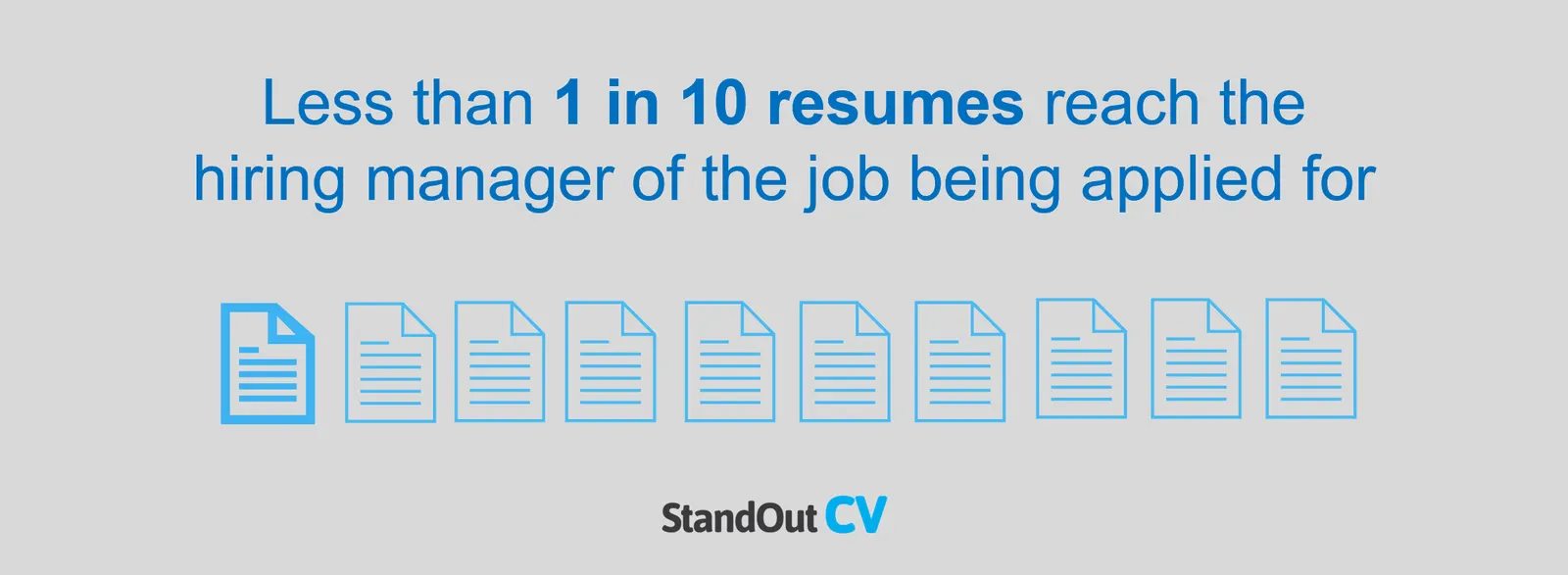
You've probably been told to keep your resume to one page. You've also probably been told that rule is outdated. Both pieces of advice coexist on the internet, which makes deciding what to actually submit feel like a coin flip. That uncertainty has real stakes: in 2026's hiring market, where a single recruiter is managing 15 to 25 open roles and reviewing 300 to 500 resumes per position, a resume that's the wrong length (bloated or suspiciously thin) can cost you a callback before a human reads a single word.
The deeper problem is that the one-page rule was never really about quality. It originated in the 1980s, when resumes were submitted on paper, recruiters kept physical filing systems, and two-page resumes literally doubled storage costs and required stapling. The constraint was logistical, not strategic. In 2026, that constraint is entirely gone, and the data on what actually gets callbacks has shifted accordingly.
The real rule: length should match career depth, not fit a myth
Before getting into tactics, here's the principle worth internalizing: resume length is not a formatting preference. It's a signal of editorial judgment. A resume that's too short for your experience suggests you're hiding something or don't know how to sell yourself. A resume that's too long signals an inability to prioritize. The goal isn't one page or two pages. It's the right number of pages for the amount of genuinely relevant, achievement-oriented content you have to show.
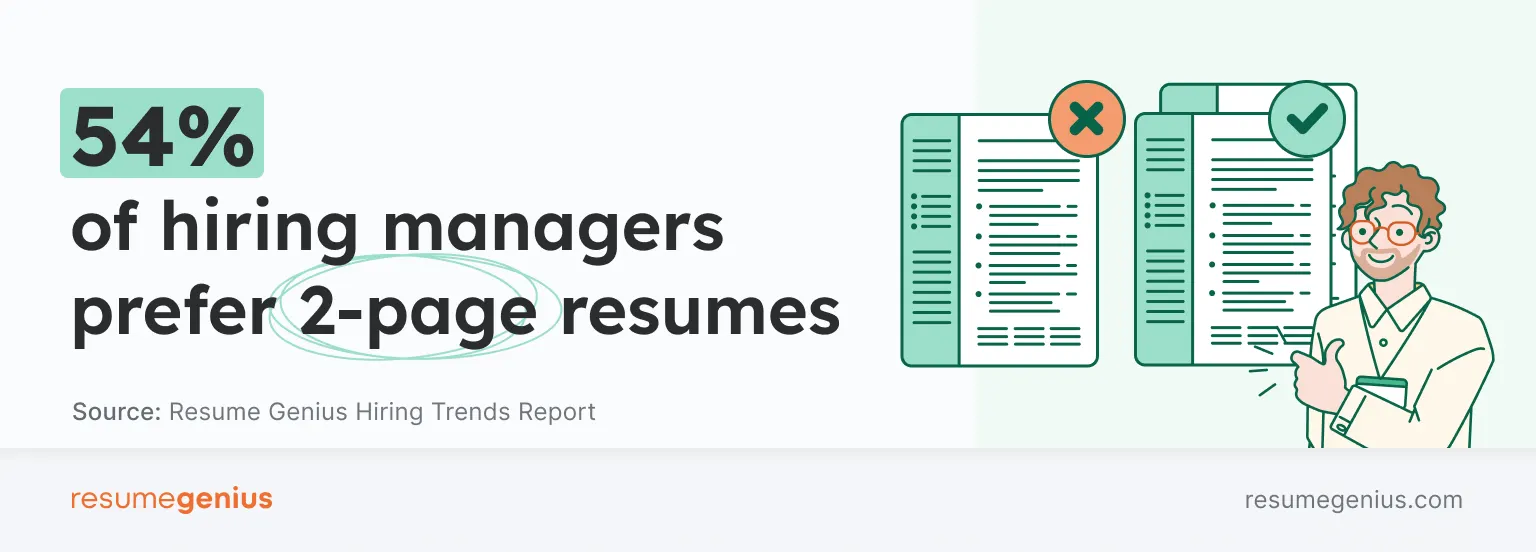
According to a 2025 survey of 1,013 HR professionals by Jobseeker, 82.1% say the ideal resume length is 1 to 2 pages, with 51% specifically preferring two pages. A separate survey found that 68.6% of recruiters now prefer two-page resumes, while only 21.6% still consider the one-page format ideal. The average resume length has grown dramatically: research comparing 50,000 resumes from 2018 versus 2023 found average word count rose from about 312 words to 503 words, the functional equivalent of nearly two pages. The market has already moved. Your resume strategy should too.
How to decide your resume length in 5 steps
1. Start with the experience-level framework
Use this as your starting point before anything else:
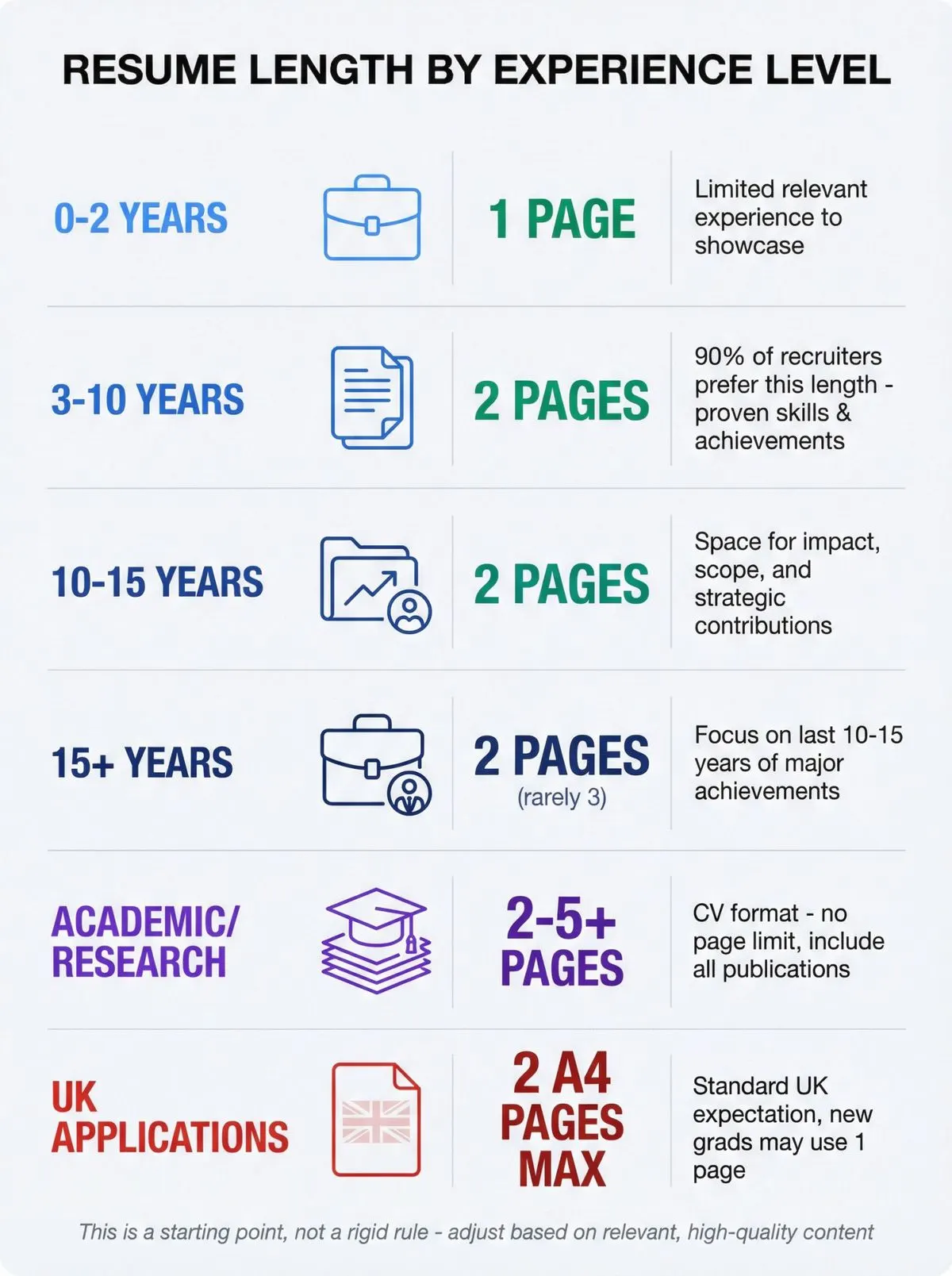
| Experience Level | Recommended Length | Why |
|---|---|---|
| 0, 3 years / Recent Graduate | 1 page | Not enough relevant experience to justify more |
| 3, 5 years (early career) | 1 page, possibly 1.5 | Lean toward one unless content genuinely fills two |
| 5, 10 years (mid-career) | 2 pages | Achievements, scope, and context require space |
| 10, 15 years (senior) | 2 pages | A decade of career history can't compress without losing differentiators |
| 15+ years / Executive / Federal / Academic | 2, 3 pages | Leadership scope, budgets, publications, and strategic initiatives need full treatment |
This framework is backed by hiring manager surveys: 77% of employers believe experienced candidates should not limit themselves to a single page, and recruiters are 2.9x more likely to select a candidate with a two-page resume for managerial positions.
2. Run the "content density test" before committing to a length
Don't choose a page count and then fill it. Let your content determine the page count. Draft your resume without worrying about length, then ask: does every bullet point contain a specific, quantified achievement? If your second page is filled with results, metrics, and relevant scope, keep it. If it contains older roles with vague descriptions, generic duties, or filler language, cut to one page. A two-page resume padded with fluff is worse than a tight one-pager. Length is only acceptable when content density is high.
3. Audit the top third of page one, it's carrying more weight than you think
Recruiters spend an average of 6 to 8 seconds on an initial resume scan. A 2024 survey of 418 hiring professionals found 47% spend just 30 seconds to 1 minute on initial review, and 33% spend only 10 to 30 seconds. The first third of your resume (your summary, headline, and top two roles) is where hiring managers decide whether to keep reading. If your most compelling credentials and metrics aren't visible in that zone, adding a second page doesn't help. It just pushes better content further from view. Before expanding length, make sure the top third is doing its job.
4. Apply the "two-thirds rule" for page two
If you're going to use two pages, page two needs to be at least two-thirds full of meaningful content. A second page that trails off with a half-empty column of text reads as an accident, not a deliberate choice. Options to fill page two substantively include: a technical skills or tools section with specific platforms and proficiency levels, a selected projects section with outcomes, a certifications and training section with dates, or an early career block that groups roles older than 10 to 15 years into a single compact line (title, company, years only, no bullets needed). This preserves the full timeline without burning space on ancient, less-relevant history.
5. Make a final call based on the callback data
If you're still on the fence, the research tips the scales. For candidates with 10 or more years of experience, a two-page resume yields 2.3 times more callbacks than a one-page version, according to ResumeGo research. Two-page resumes scored 21% higher in recruiter ratings for "providing a comprehensive summary of the candidate," and recruiters spent more than twice as long reading them, about 4 minutes versus 2 minutes for one-pagers. A well-filled two-pager holds attention better than an abbreviated one-pager. For mid-to-senior candidates specifically, two-page resumes had a 2.9% higher callback rate, which is statistically significant and enough to matter in a competitive market.
How resume length changes by situation
Recent graduates and entry-level candidates
Stick to one page, no exceptions. There is not enough relevant experience to justify a second page at 0 to 3 years of work history. Padding a second page with coursework, volunteer work, or generic club activities signals poor editing judgment, and hiring managers notice. Instead, make the single page exceptional: use a strong summary, lead with internships and relevant projects, quantify whatever you can ("managed social media accounts, grew following by 34% in 6 months"), and include a technical skills section if your field warrants it. A tight, well-curated one-pager beats a sprawling two-pager every time at this career stage.
Career changers
Your challenge isn't length. It's relevance architecture. Regardless of whether you use one or two pages, structure your resume so that transferable skills and accomplishments appear in the top third, even if the job titles and industries don't match the target role. If your previous career spans 10 or more years, two pages is appropriate because you need space to reframe your history without omitting context. If you're pivoting after 3 to 4 years, one strong page is usually more effective than two that highlight irrelevant experience.
Senior professionals and executives (15+ years)
Two pages is the floor, not the ceiling, but three pages requires specific justification. Three-page resumes are accepted for federal government positions, C-suite executives with 25 or more years of experience, or technical consultants with extensive project histories. Outside those scenarios, three pages suggests an inability to edit. The benchmark: 100% of recruiters are discouraged by resumes over 4 pages, and only 3% say a 3-page resume is ideal. At the executive level, work with a professional to edit ruthlessly. Roles older than 15 years should be compressed to a single line or a brief "Early Career" section.
Technical and academic roles
Technical roles in engineering, data science, and software development often need a dedicated skills and tools section that legitimately expands length. Listing 15 to 20 specific technologies, frameworks, and platforms is relevant content, not padding. For academic and research positions, the standard document isn't a resume at all. It's a CV (curriculum vitae), which can run 4 to 6 pages or more and includes publications, conference presentations, teaching experience, and grants. Don't conflate the two formats.
Resume length mistakes that cost candidates callbacks
Padding with job duties instead of achievements. Listing what your role was responsible for doesn't differentiate you. Fix: Replace every duty-based bullet with an outcome: "Managed customer accounts" becomes "Managed 42 enterprise accounts, retaining 94% through contract renewal cycles."
Using tiny fonts and narrow margins to fake a one-pager. Shrinking font to 9pt or margins to 0.4 inches to avoid going to page two is immediately visible and signals poor judgment. Fix: Go to two pages cleanly with standard 10.5 to 11pt body text and 0.75 to 1 inch margins.
Burying metrics on page two. Even on a strong two-pager, your most impressive numbers should appear on page one. Fix: Reorder bullet points within each role so the highest-impact achievement is first.
Including a "References available upon request" line. This takes up space and communicates nothing useful. Every recruiter already knows references exist. Fix: Delete it and use the line for a relevant bullet or additional skill.
Running a three-page resume for a non-executive role. Unless you're in federal hiring, academia, or have 25 or more years of executive experience, three pages reads as an inability to prioritize. Fix: Compress roles older than 12 to 15 years into a brief "Early Career" block without bullets.
Not filling page two adequately. A second page that's only one-third full looks like an accident. Fix: Either fill it to at least two-thirds with relevant content or consolidate to one strong page.
Your resume length decision checklist
Use this before you submit any application:
Content audit
- ✅ Every bullet point contains a specific result, metric, or measurable outcome
- ✅ No bullet point is a pure duty description ("responsible for…")
- ✅ Roles older than 12 to 15 years are condensed or grouped into an "Early Career" section
- ✅ "References available upon request" has been removed
Page one quality check
- ✅ The top third includes your strongest credential, most impressive metric, or clearest positioning statement
- ✅ Font is 10.5 to 11pt body / 12 to 13pt headings; margins are 0.75 to 1 inch
- ✅ Your most recent and most relevant role appears fully above the fold
Length decision
- ✅ 0 to 3 years experience: confirmed one page
- ✅ 5 or more years experience: confirmed two pages only if page two is at least two-thirds full of high-quality content
- ✅ 15 or more years / executive / federal / academic: confirmed two or three pages with a specific justification
- ✅ Three-page resume: confirmed this is a federal, executive, or academic application, not a standard corporate role
Final format check
- ✅ No section exists purely to fill space (skills lists, hobbies, irrelevant early jobs)
- ✅ Resume renders cleanly as a PDF with no formatting breaks between pages
- ✅ ATS-compatible format: no tables, text boxes, headers/footers with key information, or graphics
Frequently asked questions
Is a one-page resume still required in 2026? No, not for most candidates. The one-page rule is a holdover from paper-filing logistics and no longer reflects how modern recruiting works. According to a 2025 survey of 1,013 HR professionals, 82.1% prefer 1 to 2 pages, with 51% specifically preferring two pages. One page remains the right choice for candidates with 0 to 3 years of experience or recent graduates, but it is no longer the universal standard.
Will a two-page resume hurt my chances with ATS systems? No. Applicant tracking systems parse resume content. They don't penalize based on page count. A two-page resume actually gives ATS more keyword-rich text to index against the job description, which can improve your match score. The only formatting issues that hurt ATS performance are things like text boxes, tables, graphics, and key information placed in headers or footers, not total page count.
What if I have 10 years of experience but it all fits on one page? That's a signal worth investigating. Either your bullet points are too thin (duties-based rather than achievement-based) and there's more to say, or you genuinely have a narrow, consistent career history that condenses cleanly. If every bullet on your one-pager already contains specific metrics and outcomes and nothing meaningful has been left out, one page is fine. If you compressed your history to fit a rule, you've likely left out differentiating detail that recruiters for senior roles want to see.
Should page two of my resume include the same header with my name and contact info? Yes. If a recruiter prints your resume or views it as separated pages, page two should include at minimum your name and ideally a condensed header (Name | Phone | Email | LinkedIn). This is a small but important detail that many candidates miss.
How do I handle a resume that's 1.5 pages, awkwardly between one and two? Don't submit a resume that ends halfway down page two. You have two options: expand to a full two pages by adding a projects section, certifications, or more detailed bullets on your top two roles, or cut to one tight page. The "1.5 page resume" looks unfinished and suggests you couldn't make a decision. Pick a side and commit to it.
Editor's Picks
 News
News AI Layoffs 2026: Record Profits, Pink Slips & Jobs That Survive
Jul 20, 2026
 Industries
 AI & ML Engineer Jobs 2026: Salaries, Skills & How to Break In
Jul 20, 2026
 Skills
 AI Skills Non-Tech Workers Actually Need to Get Hired in 2026
Jul 20, 2026
 Job Search
 Hidden Job Market 2026: Land Roles Never Posted Online
Jul 20, 2026