Use 2026 Pay Transparency Laws to Negotiate 10–20% More Salary
Learn how 2026 pay transparency laws give you real leverage to negotiate 10–20% more salary — with scripts, frameworks, and state-by-state guidance.

Use 2026 Pay Transparency Laws to Negotiate 10, 20% More Salary
You're in the final round of interviews for a role that feels like the right next step. The recruiter just asked, "What are your salary expectations?" and you hesitate, because you don't know whether the number in your head is too high, too low, or exactly what they've already budgeted. That hesitation is costing you money. In 2026, it doesn't have to.
A wave of pay transparency laws now requires employers across 18 U.S. states plus Washington, D.C. to post the actual salary ranges they intend to pay. Not aspirational figures. Not placeholder windows. If you know how to read those ranges, reference them strategically, and handle the negotiation conversation with precision, research shows you can realistically walk away with 10, 20% more than the first offer you'd otherwise accept. By the end of this article, you'll know exactly how to do that, from finding the right data before your interview to delivering a counteroffer that lands.
What pay transparency laws actually give you in 2026
Pay transparency isn't just a feel-good policy trend. It's a structural shift in the information available to candidates, and understanding what the law requires tells you how to use it.
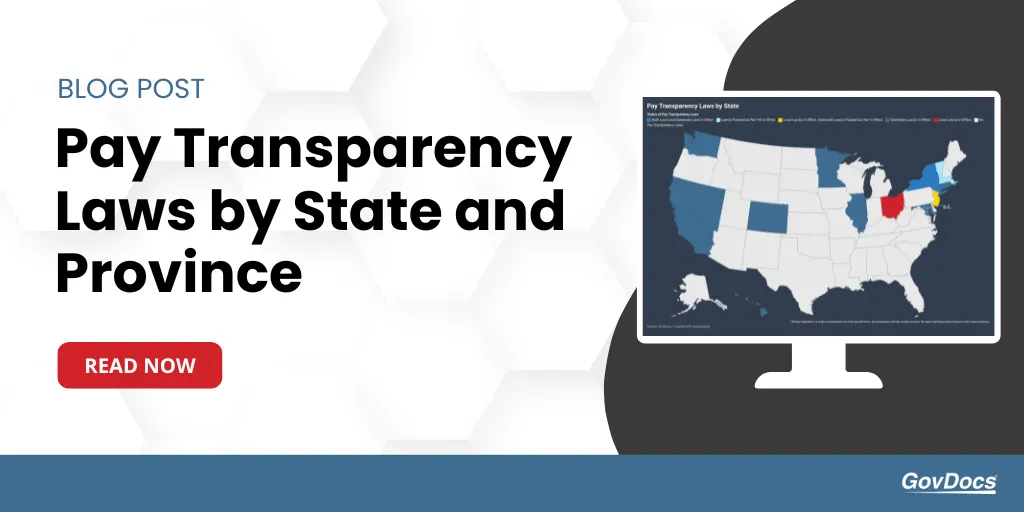
As of July 2026, 18 states plus D.C. have enacted pay disclosure laws requiring employers to share salary ranges with applicants, current employees, or both. An estimated 65% of U.S. employers now operate under some form of pay transparency mandate, many without fully realizing the scope of their obligation. The laws vary in their thresholds and requirements:
- Colorado requires all employers with at least one employee to display pay ranges in job advertisements.
- California (amended January 1, 2026) defines a posted salary range as "a good faith estimate of the salary or hourly wage range the employer reasonably expects to pay upon hire," meaning it can't be a decoy range.
- Illinois requires private and public employers with 15+ employees to include salary ranges and a general description of benefits in job postings.
- Hawaii requires employers with 50+ employees to include hourly rates or salary ranges in job posts.
- Vermont (effective July 1, 2025) applies to employers with just 5 or more employees, the lowest threshold of any state.
- Maine's law (effective January 1, 2026) applies to employers with 10+ employees and covers postings made through third-party platforms.
- Virginia (effective July 1, 2026) and Maine (with an updated round effective July 29, 2026) are among the newest additions to this list.
The "good faith" requirement is the detail most candidates overlook. In most jurisdictions, an employer cannot post a $60,000, $160,000 range as a placeholder while actually planning to hire at $95,000, $105,000. They're legally required to post the range they genuinely expect to pay. That turns the posted range into real negotiating intelligence, not just noise.
Salary history bans add another layer of protection. More than 20 states now prohibit employers from asking about your previous compensation, removing one of the oldest tactics for anchoring offers below market rate.
Even if you're not based in a transparency state, you can still use this data. Remote job postings are subject to pay transparency laws in most states where the work could be performed. If a company posts a remote role that could be filled by someone in New York or California, they typically must comply with those states' disclosure rules regardless of where their headquarters sits. That means you can research salary ranges from transparency-state postings for comparable roles and use those figures as concrete, sourced anchors in any negotiation.
Why most candidates still leave money on the table

The opportunity gap here is large and almost entirely psychological, so it's worth understanding before building your strategy.
More than 55% of job candidates do not negotiate their salary even though 73% rank salary as the most important factor when evaluating a job offer. According to Glassdoor, roughly 59% of job seekers accept the first offer without pushing back, even when employers have fully anticipated and budgeted for a counteroffer.
Here's what that costs: research on people who did negotiate found an average salary increase of 18.83% from their original offers. The lowest reported increase was 5%; some negotiators secured far more. A separate study of nearly 3,858 tech candidates published by the UCLA Anderson Review found that those who countered an offer won an average raise of 12.45%, roughly $27,000 per year.
But what about the fear of losing the offer? It's almost always unfounded. According to Fidelity, 85% of Americans who countered on pay, benefits, or both received at least some of what they asked for, and that figure rose to 87% for professionals aged 25 to 35. Data across multiple studies suggests that 94% of negotiated offers remain intact. The risk of asking is minimal; the cost of not asking is significant.
Pay transparency laws don't eliminate the need to negotiate. They give you the information required to negotiate well.
Your step-by-step negotiation preparation framework
Use this six-step process starting the moment you see a job posting.
Step 1: Harvest the posted range immediately. When you find a role you're applying for, screenshot or save the job posting with its salary range. Ranges get updated, pulled down, or quietly altered. The posted range on the day you apply is your legal and factual anchor.
Step 2: Map where you fall in the range and why. Salary bands are typically structured around a midpoint that reflects the fully competent, experienced hire. If you bring directly transferable skills, specific certifications, or a track record of measurable results, you belong at or above the midpoint. Write down three to five concrete reasons you justify the upper half of the range before you speak to anyone.
Step 3: Cross-reference with additional data sources. The posted range is a starting point, not the whole picture. Cross-check it against:
- Levels.fyi or Glassdoor for role-specific salary data at that company
- LinkedIn Salary Insights for the same title in that metro area
- BLS Occupational Employment and Wage Statistics for sector benchmarks
- Comparable job postings in California, Colorado, or New York (even if you're not there) to establish a broader market context
Step 4: Calculate your number before any conversation. Decide on three figures before the recruiter screen: your target (what you'd genuinely be happy with), your walk-in (the number you open with, set 10, 15% above your target to leave room), and your floor (the minimum you'd accept to take the role). Never disclose your floor unprompted.
Step 5: Prepare your negotiation script using the ARM method. ARM stands for Anchor, Rationale, Mitigate:
- Anchor: State your number or range confidently and specifically.
- Rationale: Tie it to the posted range, market data, and your specific qualifications.
- Mitigate: Acknowledge flexibility on timeline, scope, or total comp to keep the conversation moving.
Step 6: Prepare for the total compensation conversation. Base salary is one line item. If the employer can't move on base, know which levers you'll pull next: signing bonus, equity or RSUs, remote work stipend, accelerated performance review (at 6 months instead of 12, for example), additional PTO, or professional development budget. Rank these in order of value to you before you walk into the conversation.
How to handle the four key salary negotiation scenarios
When the recruiter asks for your salary expectations before sharing a range
This is the most common anchor attempt. Your goal is to flip the question back without seeming evasive.
Script: "I want to make sure I'm aligned with your budget. Could you share the budgeted range for this role? I've seen some postings require that disclosure now, and it would help us both move efficiently."
If they press, name a range (not a single number) that starts at your walk-in figure: "Based on market data for this role in [city/sector], I'm targeting $X, $Y, though I'm open to discussing the full comp package."
Customisation note: In transparency states, you have a legal basis to expect the range. In other states, the framing still works. You're citing market norms, not demanding a legal right.
When the offer comes in below the midpoint of the posted range
This is where the transparency law becomes your most powerful tool.
Script: "Thank you so much. I'm genuinely excited about this role. I did notice that the posted range for this position goes up to $[top of range]. Based on my [X years of specific experience / measurable result / certification], I'd like to discuss moving closer to $[your target]. Is there flexibility there, or should we explore other elements of the package?"
Why this works: You're not making up a competing offer. You're citing the employer's own posted range, a document they were legally required to publish in good faith, and asking to be compensated within it. It's nearly impossible to argue against.
When the offer comes in at the top of the posted range
You have two options: accept with clarity, or negotiate total compensation.
Script: "I appreciate that. I can see you've come in at the top of the posted range. Given that, would there be flexibility on a signing bonus or an accelerated first performance review at six months? I want to make sure we start on a strong footing."
Customisation note: If a signing bonus is off the table, ask for an explicit six-month review with a defined salary increase tied to performance criteria. Get it in writing.
When no range is posted and the employer is in a non-transparency state
You're not without data. You're just doing extra work.
Script: "I've been researching market compensation for this type of role. In comparable markets like [California/Colorado/New York], I'm seeing ranges of $X, $Y for roles at this level. Does that align with your budget, or can you give me a sense of where you're thinking?"
You've anchored with real, sourced data without making up a figure, and you've opened the door for them to disclose a range voluntarily.
Mistakes that cost candidates 10, 20% in salary negotiations
Accepting the first offer the same day it's given. Fix: Always ask for 24, 48 hours to review, even if you plan to accept. This signals professionalism and preserves negotiating room.
Naming a single number instead of a range. Fix: Always offer a range where your true target is the low end, e.g., "$95,000, $105,000" when your goal is $95,000.
Treating the salary range as the ceiling. Fix: The top of the posted range is not the maximum. It's the employer's disclosed expectation. Signing bonuses, equity, and accelerated reviews can push total comp above it.
Citing what you "need" rather than what the market supports. Fix: Never mention rent, loans, or personal expenses. Anchor exclusively to market data, the posted range, and your demonstrated value.
Negotiating over email when a call is available. Fix: Make your counteroffer verbally where possible. Tone, pauses, and responsiveness matter. Follow up in writing only to confirm what was agreed.
Failing to negotiate benefits when base salary is fixed. Fix: Ask explicitly: "If base is firm, what flexibility exists on signing bonus, remote stipend, or PTO?" Most candidates never ask this question.
Pre-offer salary negotiation checklist
Use this checklist before every final-round interview or offer conversation:
- Saved the job posting with the disclosed salary range and date accessed
- Identified my target, walk-in, and floor numbers
- Cross-referenced the posted range with Glassdoor, LinkedIn Salary, and at least one transparency-state comparable posting
- Written down 3, 5 specific qualifications that place me at or above the midpoint of the range
- Prepared the ARM script (Anchor, Rationale, Mitigate) for my counteroffer
- Ranked my total comp priorities: base, bonus, equity, remote stipend, PTO, review timeline
- Rehearsed the "What are your salary expectations?" deflection out loud
- Confirmed whether the state/role is subject to salary history ban protections
- Prepared a follow-up email template to confirm any verbal agreement in writing
- Set a 24-hour hold policy: I will not accept any offer verbally before sleeping on it
Frequently asked questions about pay transparency and salary negotiation in 2026
Can I use salary ranges from other states' job postings if I'm not applying there? Yes, and it's one of the most effective research strategies available. If a company posts a comparable role in California or Colorado with a disclosed range of $90,000, $120,000, that is real, legally required market data. You can cite it as a market benchmark in any negotiation, framing it as "comparable roles in similar markets" rather than claiming entitlement to that specific range.
What if the employer says the posted range is just an estimate and they can't go higher? In most transparency-state laws, the posted range must reflect a "good faith estimate" of what the employer actually expects to pay. If they're hiring at $80,000 but posted $80,000, $120,000, they may be in legal grey territory. You can reasonably push back: "I understand. I just want to make sure I'm being considered for the full range you published, given my qualifications." Escalating to HR or a state labor board is a last resort, but knowing the law exists strengthens your position.
Is it ever appropriate to negotiate before a formal offer is made? Generally, no. Wait until you have a written or clearly verbal offer. The exception is when a recruiter asks for your salary expectations in a screen. In that case, deflect with a range or the flip-back script above. Negotiating prematurely signals anxiety and removes your leverage before the employer has decided they want you.
What if I'm negotiating a remote role and my state has no transparency laws? Remote roles are your best opportunity to use transparency laws from other states as a benchmark. If the role could be performed from California or New York (and many remote roles can be), the employer may already be required to post a range for those applicants. Search for the same posting on job boards filtered to those states and use what you find.
Does negotiating really not affect whether I get the offer? The data is consistent: across multiple studies, 94% of negotiated offers remain intact. Employers expect negotiation. It's factored into the process. The far greater risk is accepting below-market compensation at a role where your starting salary becomes the baseline for every raise, promotion, and future offer that references your comp history.
Pay transparency laws have fundamentally changed the information available to job seekers in 2026. The salary range in a job posting is no longer a rough guideline. In most states, it's a legally binding signal of employer intent. Candidates who know how to read those ranges, research across transparency-state postings, and deliver a structured, evidence-based counteroffer are going into negotiations with more leverage than any previous generation of job seekers has had. The candidates leaving 10, 20% on the table aren't less qualified. They're just less prepared. Now you're not.
Editor's Picks
 News
News AI Layoffs 2026: Record Profits, Pink Slips & Jobs That Survive
Jul 20, 2026
 Industries
 AI & ML Engineer Jobs 2026: Salaries, Skills & How to Break In
Jul 20, 2026
 Skills
 AI Skills Non-Tech Workers Actually Need to Get Hired in 2026
Jul 20, 2026
 Job Search
 Hidden Job Market 2026: Land Roles Never Posted Online
Jul 20, 2026